





What's Happening?
Andreessen Horowitz (a16z), a prominent Silicon Valley venture capital firm, has announced the creation of its new 'Machine Age Fund,' totaling $1.1 billion. This fund is specifically dedicated to investing in the physical foundations of the artificial
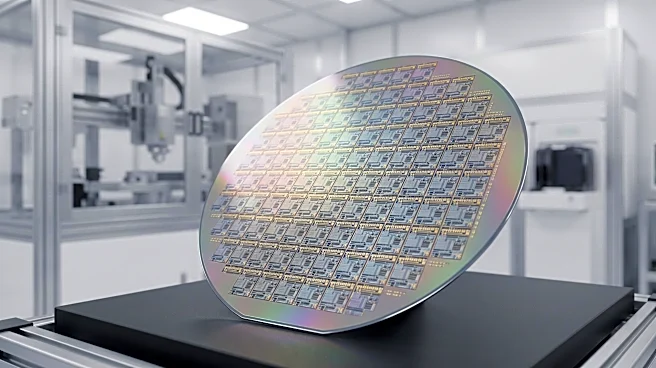
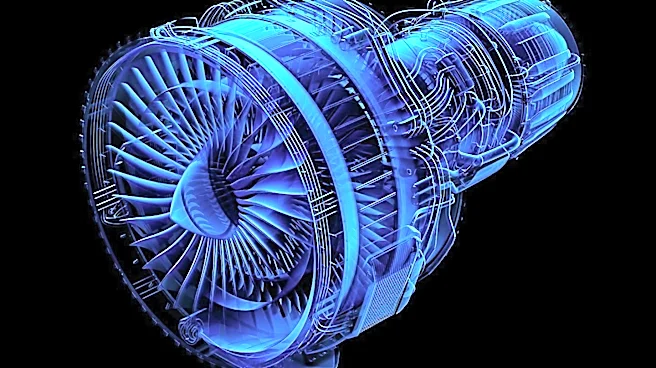
intelligence (AI) era, encompassing semiconductors, data centers, and robotics. The firm's strategy is to capitalize on the expanding applications of AI, which necessitate robust computing infrastructure. The investment scope of the Machine Age Fund includes core computing infrastructure such as semiconductors, memory, networking, and storage, as well as hardware and systems that integrate AI into the physical world, like data centers, robotics, and home AI devices. This move formalizes hardware as a key investment category for a16z, building on its previous investments in companies like SpaceX, Anduril, and Waymo. Concurrently, a16z has also expanded its Growth Fund V, launched earlier this year, from $6.75 billion to $8.5 billion through additional capital raises, targeting technology companies in their full-scale growth phases.
Why It's Important?
This significant investment by Andreessen Horowitz underscores a growing recognition within the venture capital community of the critical need for advanced hardware and infrastructure to support the rapid expansion of AI. As AI applications move beyond software-centric solutions into more complex domains like reasoning, coding, and physical world integration, the underlying computing power, data storage, and networking capabilities become paramount. This fund is poised to drive innovation and investment in sectors vital for the next phase of AI development, potentially leading to breakthroughs in semiconductor technology, more efficient data centers, and advanced robotics. The increased capital for growth-stage companies also signals a strong belief in the market's ability to scale AI-driven businesses, which could foster job creation and technological leadership in the U.S. The focus on hardware also addresses potential bottlenecks in AI development, ensuring that the physical infrastructure can keep pace with software advancements.
What's Next?
The launch of the Machine Age Fund is expected to catalyze further investment and innovation in AI hardware and infrastructure. Companies operating in semiconductors, data center technologies, and robotics can anticipate increased funding opportunities from a16z. The firm plans to leverage its existing investment expertise and global network to support these AI infrastructure companies, potentially accelerating their development and market entry. Furthermore, the expansion of Growth Fund V indicates a continued focus on scaling successful technology companies, which could lead to more robust support for startups transitioning from product-market fit to full-scale growth. a16z's strengthened 'Growth Platform,' which now includes support for sales, marketing, and pricing strategy, suggests a more comprehensive approach to nurturing its portfolio companies, aiming to enhance their market competitiveness and global reach. The firm's Seoul office will also play a role in supporting portfolio companies' expansion into Asian markets.
Beyond the Headlines
The establishment of the Machine Age Fund reflects a broader strategic shift in the technology investment landscape, moving beyond pure software plays to recognize the foundational importance of physical infrastructure in the AI era. This could signal a renewed emphasis on 'deep tech' and hardware engineering, potentially shifting talent and capital towards these areas. The fund's focus on power, cooling, and data transmission highlights the environmental and logistical challenges associated with large-scale AI deployment, suggesting future innovations may also address sustainability and efficiency in computing. This investment could also foster greater integration between AI software developers and hardware manufacturers, leading to more optimized and specialized AI systems. Ultimately, this move by a16z could contribute to the U.S. maintaining its competitive edge in AI by ensuring a robust domestic ecosystem for both AI software and the critical hardware that underpins it.