








What's Happening?
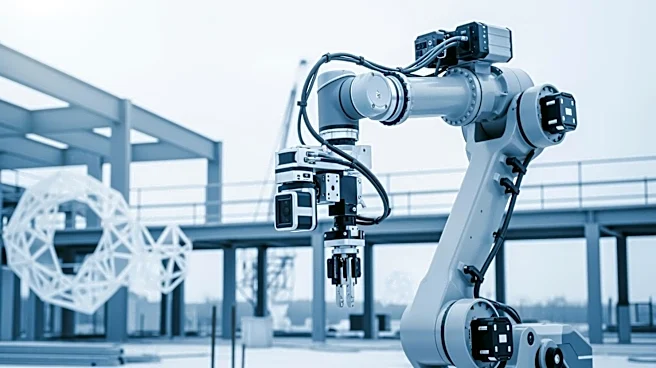
Built Robotics has partnered with the University of Pennsylvania's Safe Autonomous Systems Lab (xLAB) to develop 'physical AI' for construction sites. This collaboration aims to create a world foundation model for the safe coexistence of machines and
humans on job sites. Built Robotics, known for its autonomous controls for large construction equipment, will leverage its extensive dataset and a new data-collection robot to enhance safety and efficiency in construction. The partnership will focus on collecting diverse data from active job sites to improve AI models, enabling them to detect humans in atypical conditions and unique environments. This initiative is part of a broader effort to bridge the gap between controlled environment validation and real-world operational performance.
Why It's Important?
The collaboration between Built Robotics and xLAB is significant as it addresses the critical issue of safety in the construction industry, which is one of the most demanding environments for autonomous systems. By developing AI models that can operate safely alongside humans, this partnership could set new standards for safety in construction, potentially reducing accidents and improving efficiency. The initiative also highlights the growing role of AI in transforming traditional industries, offering a glimpse into the future of construction where machines and humans work together seamlessly. This could lead to broader acceptance and integration of AI technologies in other sectors, driving innovation and economic growth.
What's Next?
The initial phase of the research will involve deploying Built Robotics' edge AI model across a fleet of construction survey robots to collect high-fidelity sensor data. This data will be used to refine AI models and expand their application to other construction activities. As the collaboration progresses, it is expected to influence industry standards and practices, potentially leading to regulatory changes that support the integration of AI in construction. Stakeholders, including construction companies and regulatory bodies, will likely monitor the outcomes closely to assess the feasibility and impact of such technologies on the industry.