






What's Happening?
MP Materials (NYSE:MP), a U.S.-based rare-earth mining and processing company, saw its stock increase on Monday, November 23, 2026. This rise occurred as rare-earth and critical-mineral stocks collectively rebounded alongside a broader Wall Street rally.
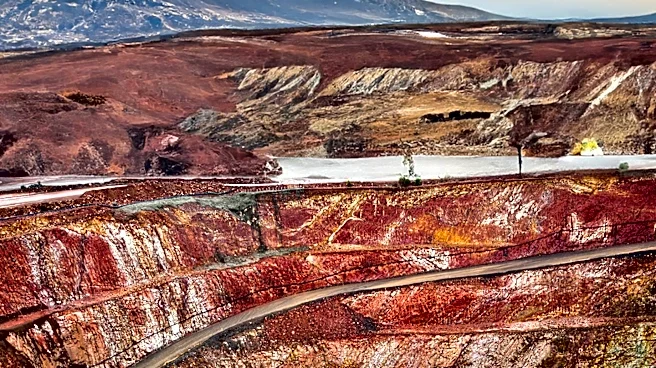
There was no specific company news driving MP Materials' gain; rather, it was part of a sector-wide movement. The company owns and operates the Mountain Pass mine in California, which is the sole large-scale rare-earth mining and processing site in the United States. Rare earths are crucial for manufacturing powerful permanent magnets used in electric vehicles, wind turbines, defense systems, robotics, and various electronics. MP Materials is actively developing its U.S. magnet-making capabilities to reduce reliance on China, which currently dominates the global supply chain for these materials. Other critical mineral stocks, such as USA Rare Earth (NASDAQ:USAR) and United States Antimony (NYSE American:UAMY), also experienced rallies on the same day, indicating a general shift in investor sentiment towards riskier assets after a challenging week.
Why It's Important?
The rebound in MP Materials and other critical mineral stocks highlights the market's sensitivity to broader economic sentiment and investor appetite for risk. These stocks are often favored by retail investors and are prone to significant fluctuations due to their ties to themes like supply-chain security, defense spending, and U.S.-China trade relations. The U.S. government and various industries are increasingly focused on securing domestic supplies of rare earths and critical minerals to reduce strategic vulnerabilities. MP Materials' efforts to establish a fully integrated rare-earth supply chain, from mining to finished magnet production within the U.S., are vital for national security and economic independence. A strong domestic rare-earth industry can mitigate risks associated with geopolitical tensions and ensure the availability of essential components for advanced technologies and defense systems. The collective movement of these stocks suggests that investors are closely watching developments in these strategic sectors, indicating potential future growth or volatility based on policy changes and global supply dynamics.
What's Next?
For MP Materials, future stock performance and operational success will largely depend on several key factors. Progress in its U.S. magnet-making operations is a significant catalyst, as is the trajectory of rare-earth prices. U.S. policy decisions regarding critical minerals and trade relations with China will also play a crucial role in shaping the company's outlook. On the broader economic front, upcoming macroeconomic data, including October PCE inflation and third-quarter GDP figures, are anticipated to influence market sentiment. The Federal Reserve's decision on interest rates in December, following statements from officials like New York Fed President John Williams indicating a willingness to raise rates if needed, will also impact speculative stocks like those in the critical minerals sector. Investors will be monitoring these economic indicators and policy developments closely to gauge the future direction of the market and the performance of MP Materials.
Beyond the Headlines
The performance of MP Materials and the broader critical minerals sector extends beyond daily stock fluctuations, touching upon significant geopolitical and economic implications. The push for domestic rare-earth production by companies like MP Materials is a direct response to the U.S.'s strategic vulnerability due to its heavy reliance on China for these essential materials. This effort is part of a larger global trend where nations are seeking to secure their supply chains for critical resources, driven by concerns over national security, economic competitiveness, and technological leadership. The development of a robust U.S. rare-earth industry could foster innovation in related sectors, create high-tech manufacturing jobs, and enhance the country's defense capabilities. However, it also involves substantial capital investment, technological challenges, and environmental considerations associated with mining and processing. The long-term success of these initiatives will depend on sustained government support, technological advancements, and the ability to compete effectively in a global market dominated by established players.