







What's Happening?
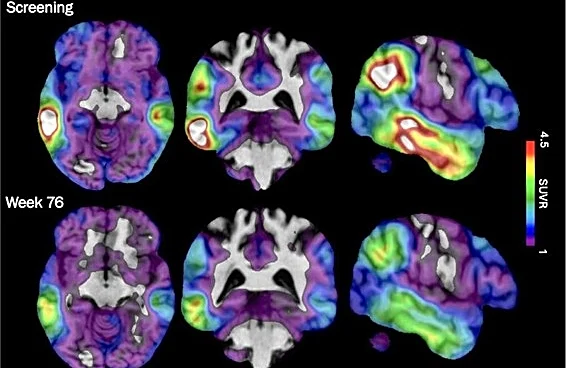
Biogen and Ionis have announced the results of a phase 2 clinical trial for their Alzheimer's drug candidate, diranersen, which targets tau proteins. The trial, presented at the Alzheimer's Association International Conference in London, showed that diranersen slowed
cognitive decline by 26% compared to a placebo over 76 weeks. This efficacy is comparable to existing amyloid-targeting drugs like Eisai/Biogen's Leqembi and Eli Lilly's Kisunla. Diranersen is unique in its ability to reduce both intracellular and extracellular tau, unlike other drugs that focus solely on extracellular tau. Despite these promising results, the lack of a clear dose-response relationship in the trial data has raised concerns among investors. The strongest cognitive response was observed with a 60 mg dose administered every six months, while higher doses showed less efficacy. Consequently, Biogen's shares fell by 8% and Ionis' by 2.5%.
Why It's Important?
The development of diranersen is significant as it offers a new approach to treating Alzheimer's by targeting tau proteins, which are implicated in the disease's progression. The potential to combine tau-targeting drugs with amyloid-targeting ones could enhance treatment efficacy. However, the lack of a dose-response relationship in the trial data poses challenges for the drug's development and investor confidence. The decline in Biogen and Ionis' shares reflects market skepticism about the drug's commercial viability. Successful development of diranersen could lead to improved outcomes for Alzheimer's patients, a group with limited treatment options. The results also highlight the ongoing challenges in Alzheimer's drug development, where many candidates have failed to show clinical efficacy.
What's Next?
Biogen and Ionis plan to proceed with a phase 3 trial for diranersen, expected to start next year, with results anticipated by the end of the decade. This trial will be crucial in determining the drug's efficacy and safety profile, as well as its potential market impact. The companies will need to address the dose-response issue to bolster investor confidence and regulatory approval prospects. The outcome of the phase 3 trial will be closely watched by stakeholders, including patients, healthcare providers, and investors, as it could influence future research directions and investment in Alzheimer's treatments.