






What's Happening?
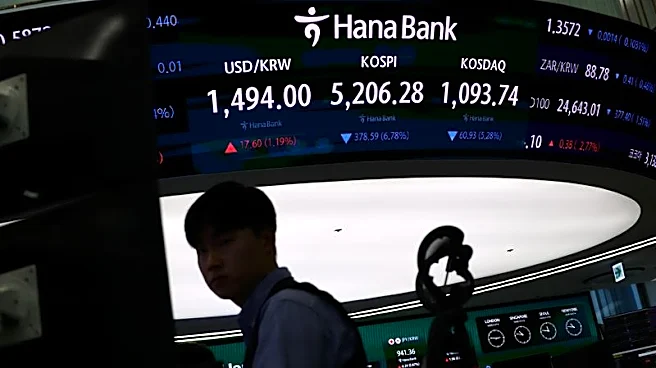
Bitcoin experienced a 1% increase, reaching approximately $63,800, while Asian equity markets faced significant declines. This marks the second instance within a week where cryptocurrency markets have remained stable despite volatility in traditional
markets, particularly in the artificial intelligence sector. Other major cryptocurrencies such as Ether, XRP, and BNB also saw gains, while Solana remained steady. The downturn in Asian markets was primarily driven by a sharp decline in South Korean chipmakers, with SK Hynix and Samsung experiencing substantial losses. The Federal Reserve's upcoming rate decision and economic indicators are anticipated to influence market movements further.
Why It's Important?
The stability of cryptocurrencies like Bitcoin during periods of traditional market volatility underscores their potential as alternative investment vehicles. This resilience may attract more investors seeking to diversify their portfolios amidst economic uncertainties. The contrasting performance between crypto and traditional markets highlights the evolving dynamics of global finance, where digital assets are increasingly seen as a hedge against market fluctuations. The ongoing developments in the crypto sector, including regulatory discussions and technological advancements, continue to shape its role in the broader financial landscape.
What's Next?
The Federal Reserve's rate decision and upcoming economic data releases, including GDP figures and inflation metrics, are expected to impact both traditional and crypto markets. Investors will be closely monitoring these developments to gauge potential shifts in monetary policy and their implications for asset prices. Additionally, the passage of the Clarity Act, which addresses regulatory aspects of the crypto market, remains a key focus for stakeholders. The outcome of these events could influence investor sentiment and market trends in the coming weeks.