







What's Happening?
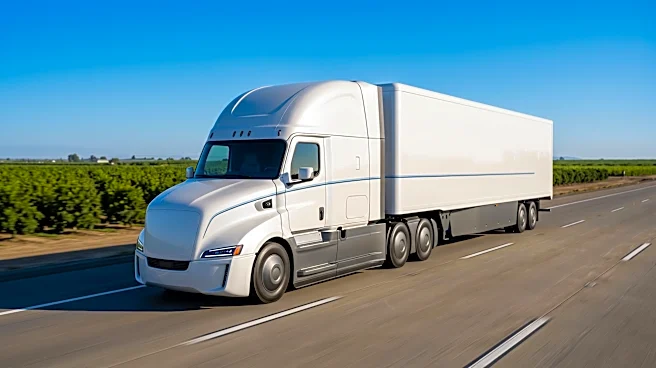
Fresno-based DTL Transport Inc. and autonomous driving technology company Kodiak AI have initiated an autonomous trucking pilot program in California. The pilot, which began on September 22nd, involves self-driving trucks hauling perishable goods between
Fresno and a distribution center in Los Angeles along Highway 99. While the trucks are autonomous, a human driver remains in the vehicle as a safety measure. This initiative marks the first autonomous trucking deliveries under California’s new regulations, following Kodiak’s receipt of a heavy-duty Autonomous Vehicle Testing permit from the California Department of Motor Vehicles in August. The collaboration aims to explore how autonomous trucking can enhance business opportunities for logistics providers and improve the resilience, reliability, and safety of the supply chain.
Why It's Important?
This pilot program is significant for the U.S. transportation and logistics industries. It represents a tangible step towards integrating autonomous technology into commercial freight operations, which could lead to substantial changes in how goods are transported across the country. The study will assess the impact of autonomy on transit times, shipping costs, and the shelf life of perishable goods, potentially offering solutions to rising food costs and supply chain inefficiencies. If successful, this model could be replicated nationwide, transforming the trucking industry by addressing labor shortages, improving safety through reduced human error, and optimizing delivery schedules. The involvement of a human driver during this pilot phase also highlights the cautious and incremental approach being taken to ensure safety and build public trust in autonomous vehicle technology.
What's Next?
The pilot program will continue to gather data on the performance and efficiency of autonomous trucks in real-world conditions. The companies will analyze the findings to better understand the operational benefits and challenges of this technology. Future steps will likely involve expanding the routes, increasing the volume of goods transported, and potentially reducing the need for human intervention as the technology matures and regulatory frameworks evolve. The success of this pilot could pave the way for broader adoption of autonomous trucking in California and other states, influencing future regulations and investment in autonomous vehicle research and development. Stakeholders, including other logistics companies, technology providers, and regulatory bodies, will closely monitor the results to inform their strategies and policies.
Beyond the Headlines
Beyond the immediate logistical and economic implications, this pilot touches upon broader societal and ethical considerations. The increasing automation in the trucking industry raises questions about the future of human employment in a sector that traditionally employs a large workforce. There are also ongoing debates about the legal and ethical responsibilities in the event of accidents involving autonomous vehicles. Furthermore, the environmental impact of autonomous trucks, particularly in terms of fuel efficiency and emissions, will be a critical area of study. The integration of AI into such a vital industry also highlights the growing reliance on advanced technology for essential services and the need for robust cybersecurity measures to protect these systems from potential threats. This pilot is a microcosm of the larger technological shift impacting various industries, prompting a reevaluation of workforce training, infrastructure development, and regulatory oversight.