






What's Happening?
Rui Pinto, the Portuguese computer hacker and activist known for founding Football Leaks, has had his witness protection status revoked by Portuguese authorities. This decision comes despite a recent assault on Pinto in April, with police deeming his safety
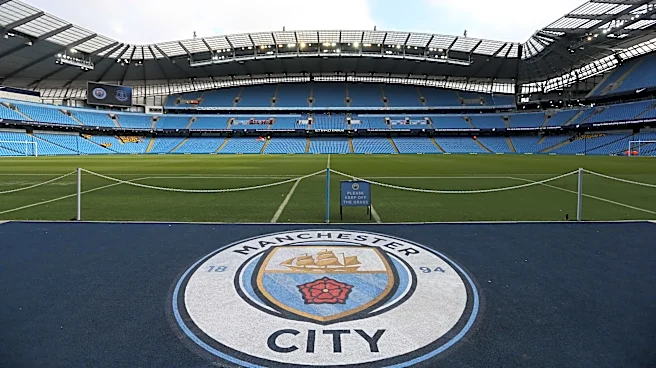
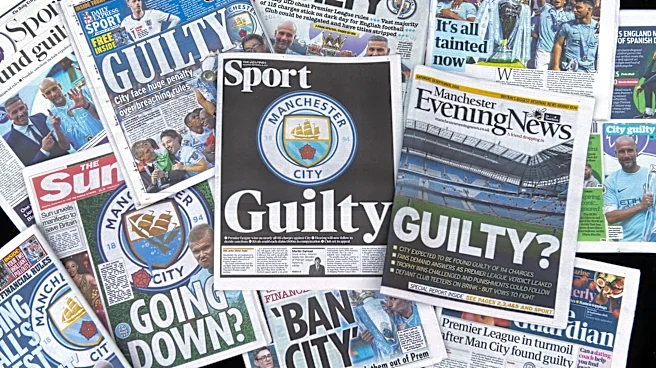
risk to be low. Pinto, who has been a protected witness since August 2020, agreed to provide Portuguese authorities with access to millions of files he gathered. His leaks were instrumental in the Premier League's investigation into Manchester City Football Club, which was found guilty of 115 charges of financial misconduct. Pinto's early work focused on Portuguese football clubs, and he was later given a four-year suspended sentence for cybercrimes and attempted extortion, though he was acquitted on 241 other counts in a separate trial.
Why It's Important?
The revocation of Rui Pinto's witness protection status carries significant implications for whistleblowers and the fight against corruption in sports and beyond. It raises concerns about the safety and security of individuals who expose illicit activities, especially when their information leads to major investigations against powerful entities. For the Premier League and other sports governing bodies, Pinto's actions have demonstrated the critical role whistleblowers can play in upholding financial fair play and integrity. The decision by Portuguese authorities to remove his protection, despite a recent assault, could be seen as a disincentive for others to come forward, potentially hindering future efforts to uncover corruption. This situation also highlights the complex legal and personal challenges faced by whistleblowers, who often navigate a precarious balance between public interest and personal risk.
What's Next?
Rui Pinto has been advised to exercise caution with family contacts and avoid social media following the revocation of his witness protection. The Premier League's charges against Manchester City, based on Pinto's leaks, could lead to sanctions ranging from a fine to expulsion from the league, with City expected to appeal the verdict. Pinto has been vocal on social media about the Manchester City conviction, calling it a 'historic decision for English football.' The long-term impact on Pinto's personal safety and legal standing remains to be seen, as does the broader effect on future whistleblowing activities in sports and other sectors. The case will likely continue to be a focal point for discussions on whistleblower protections and the enforcement of financial regulations in professional sports.
Beyond the Headlines
Rui Pinto's journey from self-taught hacker to a key figure in exposing financial misconduct in football reveals the evolving landscape of investigative journalism and accountability. His case brings to light the ethical and legal dilemmas surrounding the acquisition and dissemination of confidential information, even when it serves the public interest. The decision to revoke his witness protection, particularly after he provided crucial evidence to authorities, could be perceived as a failure of the system to adequately safeguard those who expose wrongdoing. This could have a chilling effect on potential whistleblowers, making them hesitant to come forward with information that could lead to significant reforms or prosecutions. The broader implication is a potential weakening of transparency and accountability mechanisms in industries where powerful organizations operate with limited external oversight.