



What's Happening?
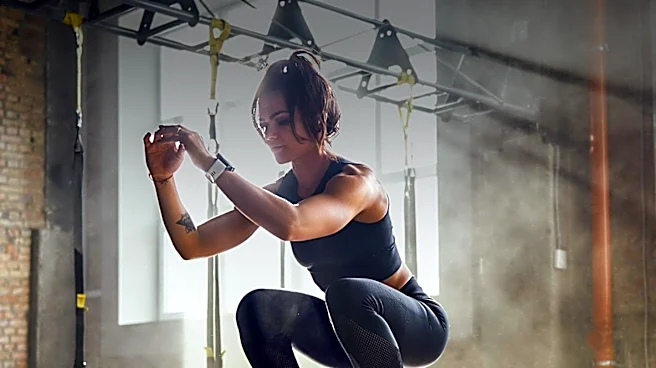
Strength and conditioning coach and Mirafit ambassador Mark Harris is promoting bodyweight training as an effective method for building shoulder muscle. He highlights that bodyweight exercises remove common barriers to entry such as the need for a gym,
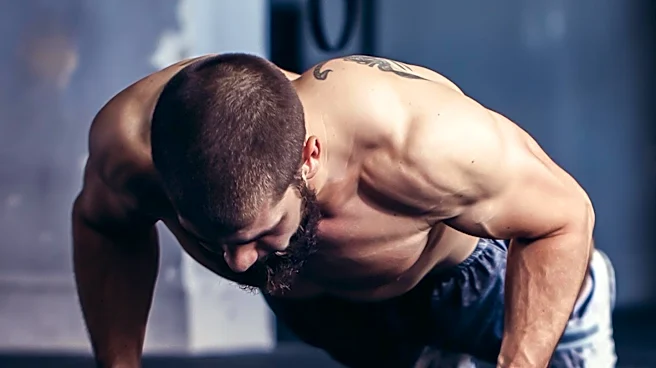
equipment, or a spotter. Harris emphasizes that this training approach is highly effective for the upper body because it forces individuals to master their own biomechanics and core stability. He also notes that bodyweight training heavily relies on time under tension and proprioception, which contributes to the development of resilient, functional joints alongside muscle size. A study in the Journal of Strength and Conditioning Research supports this by demonstrating that push-up variations, when loaded to match equivalent muscle activation patterns, can produce similar muscle thickness gains to traditional bench pressing.
Why It's Important?
This approach to fitness is important because it democratizes strength training, making it accessible to a wider population without the financial burden or logistical challenges associated with gym memberships and specialized equipment. By focusing on bodyweight exercises, individuals can achieve significant muscle development and improved joint health, which can lead to better overall physical well-being and reduced risk of injury. The emphasis on mastering biomechanics and core stability also promotes functional strength, which is crucial for daily activities and athletic performance. This method offers a sustainable and cost-effective alternative to traditional weightlifting, potentially encouraging more people to engage in regular physical activity and improve their physical resilience.
What's Next?
Individuals interested in incorporating bodyweight training for shoulder development can start by following Harris's recommendations. He suggests a proper warm-up including two sets of 15 forward and backward arm circles, followed by 10 to 15 scapular push-ups to prime the rotator cuffs and shoulder joints. Following the warm-up, three key bodyweight movements are recommended: pike push-ups, wall walks, and wall-supported handstand holds. Harris advises focusing on execution and control over simply chasing high rep counts, suggesting that slowing down movements, such as a pike push-up with a 3-second lowering phase, is more effective for muscle growth than performing fast, sloppy repetitions. This guidance provides a clear pathway for individuals to begin or enhance their bodyweight shoulder training.
Beyond the Headlines
The advocacy for bodyweight training by experts like Mark Harris signifies a broader shift in fitness philosophy towards more accessible and functional approaches. This trend challenges the long-held belief that heavy weights are indispensable for muscle hypertrophy, suggesting that effective strength building can be achieved through mastering one's own body. This has implications for public health, potentially reducing barriers to exercise and promoting a more holistic understanding of physical fitness that prioritizes joint health, stability, and proprioception alongside muscle size. It also highlights the importance of proper form and controlled movements, which can lead to more sustainable fitness practices and fewer training-related injuries in the long run.