






What's Happening?
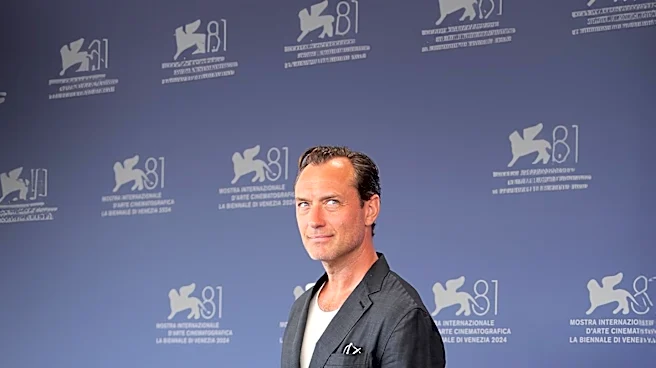
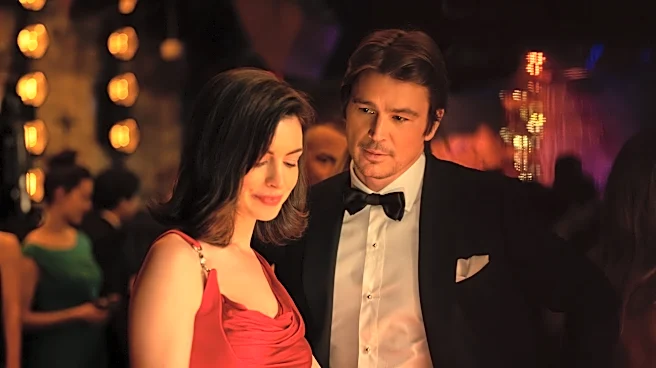
Actor Jude Law has expressed regret over his decision to star in the 2004 remake of 'Alfie'. Law, who had recently received an Oscar nomination for 'Cold Mountain', chose to take on the role of a Cockney cab driver in Manhattan. He admitted that he 'kicked
himself' for selecting a film that leaned into his 'heartthrob' and 'charismatic lead' image, which ultimately did not resonate with audiences. The original 1966 film, starring Michael Caine, depicted a womanizer facing the consequences of his actions, while Law's version was perceived as a glossy advertisement for a lifestyle rather than a critical character study. Law felt the film was 'a little light, a little too cheesy' and that it was made for too much money, with him being overpaid. Despite appearing in several other films in 2004, including 'Closer' and 'The Aviator', the high visibility of 'Alfie' made its misfire more pronounced.
Why It's Important?
This reflection by Jude Law highlights the pressures and strategic decisions actors face in Hollywood, particularly after achieving critical acclaim. The choice of roles can significantly impact an actor's public perception and career trajectory. For Law, 'Alfie' represented a deviation from more critically respected projects, demonstrating how even established actors can misjudge audience expectations or the artistic merit of a film. This situation underscores the commercial considerations that often influence film production, where a star's 'heartthrob' status might be prioritized over a nuanced narrative. The film's failure to capture the essence of the original also illustrates the challenges of remaking classic movies, especially when attempting to modernize themes that were deeply rooted in a specific cultural context. The financial investment and the star power involved in 'Alfie' further emphasize the risks associated with such projects in the entertainment industry.
What's Next?
While Law expressed regret over 'Alfie', his career has continued to thrive with diverse roles and critical success in subsequent projects like 'Closer' and 'The Aviator' in the same year. This indicates that a single misstep, even a highly visible one, does not necessarily derail a prominent actor's career. For the film industry, this serves as a reminder of the unpredictable nature of audience reception and the importance of balancing commercial appeal with artistic integrity. Future projects involving Law, such as 'The Order', 'Eden', and 'Black Rabbit', suggest a continued focus on varied and challenging roles, moving beyond the 'heartthrob' image he felt 'Alfie' exploited. This ongoing diversification of his filmography demonstrates a strategic effort to maintain relevance and artistic credibility in a competitive industry.
Beyond the Headlines
Law's candid admission about 'Alfie' touches upon the broader theme of artistic integrity versus commercial viability in the film industry. Actors, particularly those at the height of their fame, often face choices between roles that offer significant financial compensation and those that are more artistically fulfilling. The regret expressed by Law suggests a personal and professional reckoning with such decisions. It also highlights the evolving nature of celebrity and public image, where an actor's persona can sometimes overshadow the quality of their work. The comparison between the 1966 and 2004 versions of 'Alfie' further illustrates how cultural values and cinematic tastes change over time, making faithful remakes a complex endeavor. This situation prompts a deeper consideration of how actors navigate their careers, balancing the demands of the industry with their own artistic aspirations and the desire for a lasting legacy.