







What's Happening?
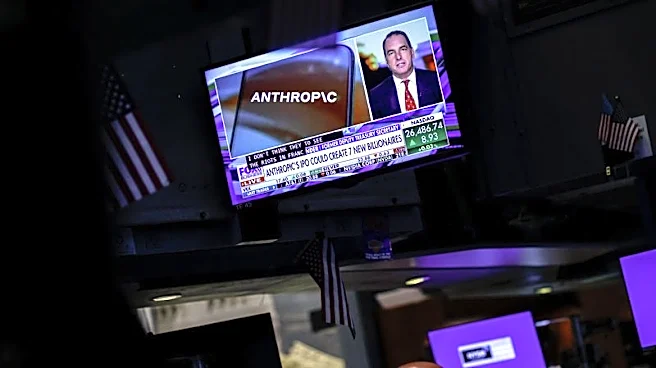
Anthropic, an AI lab, has filed a registration statement on Form S-1 with the U.S. Securities and Exchange Commission (SEC) for a proposed initial public offering (IPO) of its Class A common stock. The company intends to list on the Nasdaq Global Select
Market under the ticker symbol ANT. While an official IPO date has not been announced, reports suggest a possible listing during the week of November 16, 2026, though this remains unconfirmed. The amended S-1 filing reveals significant financial figures, including $17 billion in third-quarter revenue and approximately $895.4 billion in purchase commitments, primarily for computing and data-center infrastructure. The filing also indicates a net loss for the latest three months. The IPO process is proceeding amidst a tech stock selloff, leading market commentators like Jim Cramer and Mike O’Rourke to suggest Anthropic may need to accept a lower valuation. New York City Comptroller Brad Lander has urged Anthropic to pause its IPO to address concerns regarding AI safety, governance, and development speed.
Why It's Important?
Anthropic's IPO is significant as it will set a crucial benchmark for the valuation of frontier AI labs in the public market. A successful debut could validate the high demand for AI technologies and influence the private market valuations of rival AI companies. Conversely, a weak IPO could make it harder for competitors to defend their private market marks. The substantial $895.4 billion in compute commitments, juxtaposed with $17 billion in quarterly revenue, highlights the immense infrastructure costs associated with developing advanced AI, raising questions about long-term profitability and capital intensity in the sector. The concerns raised by New York City Comptroller Brad Lander about AI safety and governance underscore the growing scrutiny from public officials and investors regarding the ethical implications and societal risks of rapidly advancing AI technologies. This could influence how future AI companies approach their public offerings and corporate governance structures, potentially leading to increased demands for transparency and accountability.
What's Next?
Anthropic's next steps will likely involve a further amended S-1 filing that includes a share count and a proposed price range, followed by a roadshow to engage with potential investors. The SEC must declare the registration statement effective before shares can be sold. Market analysts anticipate the price range will be set below earlier investor expectations due to current market conditions. The company faces a decision between proceeding with a potentially lower valuation, which would secure capital but reset private market marks, or delaying the IPO, which could lead to stale financials and allow competitors to gain ground. The scrutiny on the $895.4 billion compute commitments is expected to intensify, with analysts dissecting the timing and counterparty details, which will heavily influence investor sentiment. The reaction from institutional investors, particularly public pension funds overseen by officials like Comptroller Lander, will be critical in determining the demand and ultimate success of the offering.
Beyond the Headlines
The Anthropic IPO transcends typical financial considerations, touching upon deeper ethical and societal implications of artificial intelligence. As a public benefit corporation that has emphasized AI safety, its transition to a public company will test the balance between profit motives and its stated mission. The pressure to deliver quarterly results could potentially influence its approach to AI development, possibly accelerating deployment or altering safety protocols. The sheer scale of its compute commitments also highlights the environmental impact of AI, given the energy demands of data centers, which could become a more prominent concern for investors and regulators. Furthermore, the public offering of a company whose CEO warns of AI's risks to humanity presents a unique narrative, potentially shaping future disclosure requirements for AI firms regarding existential risks. This IPO could catalyze broader discussions about the role of public markets in funding technologies with profound, and potentially disruptive, societal consequences.