

What's Happening?
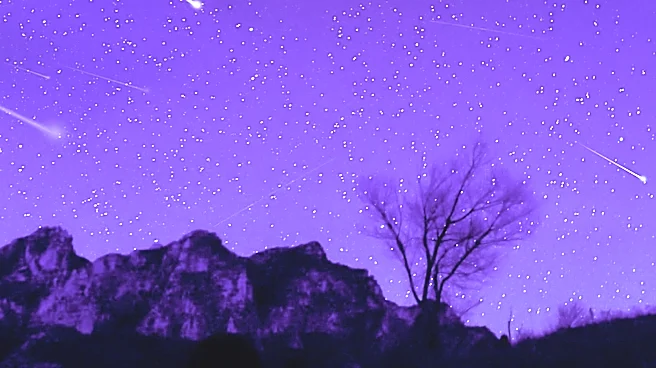
Several major meteor showers are set to light up the skies in the coming months, providing excellent opportunities for stargazing across the United States. The Perseid meteor shower, peaking on August 12-13, is expected to be particularly spectacular,
with up to 100 meteors per hour visible under dark skies. Other notable showers include the Orionids in October, the Leonids in November, and the Geminids in December. Ideal viewing locations include the Grand Canyon in Arizona, Badlands National Park in South Dakota, and the Oregon Outback, all known for their dark skies and minimal light pollution.
Why It's Important?
Meteor showers offer a unique opportunity for both amateur and professional astronomers to observe celestial events. These natural phenomena not only provide a chance to appreciate the night sky but also boost local tourism in areas known for stargazing. National parks and dark sky sanctuaries often see increased visitation during these events, benefiting local economies. Additionally, these events raise awareness about the importance of preserving dark skies and reducing light pollution.
What's Next?
As the dates for these meteor showers approach, national parks and observatories are likely to host special events and viewing parties to accommodate increased interest. Travelers planning to witness these celestial events should consider booking accommodations in advance, as popular stargazing locations may see a surge in visitors. Additionally, ongoing efforts to protect dark skies will continue to be a focus for environmental groups and local governments.