





What's Happening?
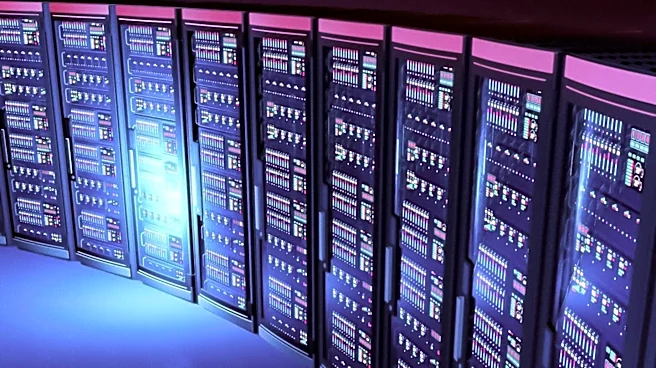
The construction and operation of large-scale data centers, particularly those designed for artificial intelligence (AI) processing, are raising concerns globally due to their significant energy and water consumption. The Datagrid facility in Makarewa,
New Zealand, is set to use 280 megawatts of power, making it the country's second-largest electricity consumer. This facility, along with others, highlights the growing energy demands of AI data centers. The International Energy Agency and a United Nations research group have projected that data center energy use will double by 2030. Opposition to these centers is particularly strong in the U.S., where local protests have blocked or delayed numerous projects.
Why It's Important?
The rapid expansion of AI data centers poses challenges for resource allocation and environmental sustainability. These centers require vast amounts of electricity and water, potentially competing with local communities for resources. The environmental impact, including increased carbon emissions and water usage, is a significant concern. As AI technology becomes more integral to global business and society, balancing technological advancement with environmental responsibility becomes crucial. The situation underscores the need for clear regulations and sustainable practices in the development and operation of data centers.
What's Next?
Governments and industry leaders may need to establish regulations to manage the environmental impact of data centers. This could include requirements for renewable energy use and water conservation measures. Collaboration between countries, such as New Zealand and Australia, could lead to the development of sensible regulations. The industry might also explore technological innovations to reduce energy and water consumption, ensuring that data centers can operate sustainably while supporting technological growth.