




What's Happening?
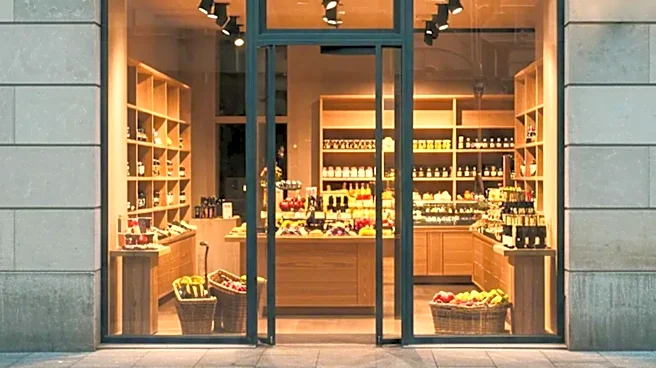
Zingone Bros., a family-owned grocery store on New York City's Upper West Side, is closing its doors after 99 years of operation. The beloved institution, known for its community feel and as a favorite spot for celebrities like Jerry Seinfeld, John McEnroe,
Ally Sheedy, and Kevin Bacon, announced its closure at the end of the month. The decision stems from the owners' desire to retire and the increasing difficulty of maintaining the business. Longtime customers have expressed sadness and nostalgia, highlighting the loss of a neighborhood stalwart that offered a personal touch, including an honor system tab for regulars. The closure adds to a growing number of independent, mom-and-pop shops disappearing from Manhattan, contributing to the city's issue of empty storefronts.
Why It's Important?
The closure of Zingone Bros. signifies more than just the end of a grocery store; it represents the fading of a particular kind of community institution in New York City. For nearly a century, it served as a hub where personal connections were forged, contrasting sharply with the impersonal nature of larger supermarket chains. This trend of independent businesses being replaced by corporate entities has significant implications for urban communities, leading to a loss of local character, unique services, and personalized customer experiences. The disappearance of such establishments can erode the social fabric of neighborhoods, as they often serve as informal gathering places and sources of local identity. Economically, it reflects the challenges faced by small businesses in competitive urban environments, including rising operational costs and changing consumer habits.
What's Next?
The closure of Zingone Bros. will leave a void in the Upper West Side community, prompting residents to seek alternative grocery options, likely from larger chains. This event may intensify discussions about the preservation of small businesses and the impact of corporate expansion on local economies and community life in New York City. It could also spur local initiatives or policy considerations aimed at supporting independent retailers. The emotional response from customers underscores a broader desire for authentic, community-oriented businesses, suggesting that while the immediate future will see more corporate dominance, there may be a long-term push for revitalization of local commerce. The fate of the store's beloved cat, Oliver, now up for adoption, also highlights the personal connections fostered by such establishments.
Beyond the Headlines
The closure of Zingone Bros. is a poignant symbol of a broader cultural shift in urban America, where the traditional 'mom-and-pop' shop is increasingly struggling to survive against the backdrop of digital commerce and large-scale retail. This development raises questions about the value society places on efficiency and convenience versus community and personal connection. The store's practice of maintaining an honor system tab for customers speaks to a bygone era of trust and neighborliness that is becoming rare. The emotional reactions from customers, some moved to tears, underscore the deep attachment people form with places that offer more than just goods—they offer a sense of belonging and continuity. This trend could lead to a more homogenized urban landscape, where unique local businesses are replaced by interchangeable chains, potentially diminishing the cultural richness and distinctiveness of neighborhoods.