






What's Happening?
Famed investor Michael Burry has highlighted a Wall Street Journal report revealing that major technology companies have accumulated approximately $3 trillion in future artificial intelligence spending that is not fully reflected on their official balance
sheets. This figure is roughly triple the amount these companies currently report in outstanding leases and long-term borrowings. The hidden obligations primarily consist of $1.9 trillion in purchase commitments for chips, servers, and hardware, and $1.2 trillion in leases that have been signed but not yet commenced. Alphabet, for instance, disclosed $811 billion in purchase commitments and contractual obligations as of June 30, a 152% increase in a single quarter. Other companies like Meta, Microsoft, and Amazon also hold significant off-balance-sheet commitments. This financial structure, while not illegal, raises concerns about the transparency and true financial leverage of these tech giants.
Why It's Important?
This revelation is significant because it indicates a much larger financial commitment to AI infrastructure than what is publicly visible, potentially misleading investors about the true financial health and risk exposure of these companies. The rapid expansion of this 'shadow ledger' suggests that the AI boom is being financed through mechanisms that defer the recognition of liabilities, making it harder for analysts and investors to assess real leverage. If demand for AI services shifts or if the expected revenue growth does not materialize, the deferred depreciation and other obligations could significantly impact profit margins. This could lead to a re-evaluation of these companies' stock valuations, as the current pricing might not fully account for these substantial off-balance-sheet commitments. The situation also highlights a potential systemic risk, as problems with a single counterparty in these complex financing arrangements could ripple across multiple balance sheets.
What's Next?
Investors are advised to shift their focus from traditional capital expenditures and reported debt to the free cash flow relative to committed spending, as this is where the real financial risk is accumulating for companies like Microsoft, Amazon, Alphabet, and Meta. The inconsistent disclosure of these commitments across companies further complicates analysis, making it difficult to compare 'true' leverage. The long-term implications include potential pressure on margins if revenue growth does not keep pace with the eventual recognition of these costs. There is also a risk that a pivot towards cheaper AI alternatives could undermine the revenue streams and equity stakes that justified these massive investments. The financial media is expected to continue covering these hidden financial obligations, with Burry predicting that the 'compression's threat' will be a major topic in 2027.
Beyond the Headlines
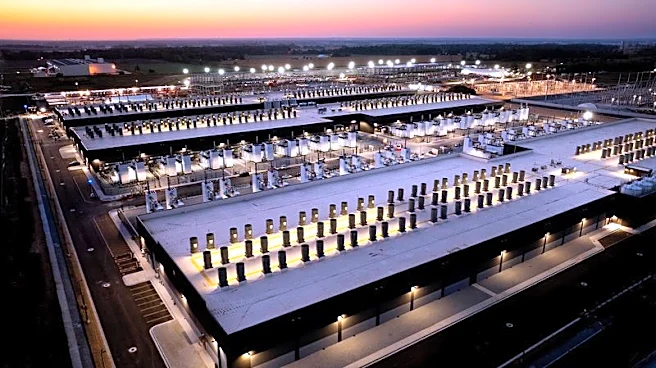
The practice of utilizing off-balance-sheet arrangements, while compliant with accounting rules, raises ethical questions about financial transparency and investor protection. While not accounting fraud, the timing and visibility of these obligations can obscure the full financial picture, potentially creating an environment where systemic risks are underestimated. The case of Meta's Hyperion data center debt, where Blue Owl Capital is the majority owner and Meta is merely a tenant, exemplifies how creative financing can keep significant liabilities off a company's balance sheet. This trend could lead to increased regulatory scrutiny on how large corporations disclose their long-term financial commitments, especially in rapidly evolving sectors like AI. The reliance on such complex financial engineering could also foster a false sense of security among investors, reminiscent of past market bubbles where underlying financial risks were not fully appreciated until it was too late.