





What's Happening?
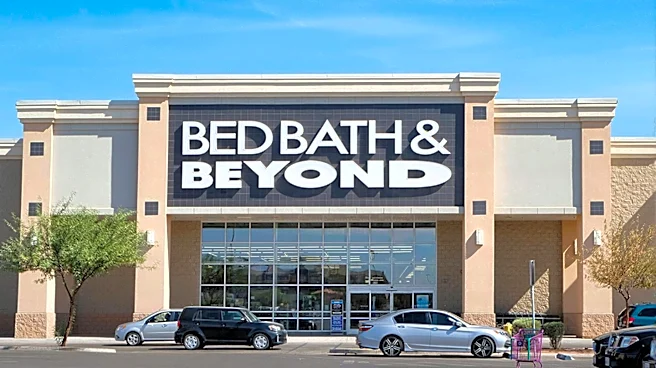
Former Bed Bath & Beyond retail spaces across California are being repurposed as Spirit Halloween stores. This transition is evident in locations such as the former Bed Bath & Beyond on Ventura Boulevard in Los Angeles, which is now operating as a Spirit Halloween outlet.
This trend indicates a significant shift in the retail landscape, where the closure of a major home goods retailer is creating opportunities for seasonal businesses. The conversion of these large retail footprints highlights the dynamic nature of commercial real estate and the adaptability of spaces to new tenants, particularly those with temporary operational models like Spirit Halloween. The change reflects the broader challenges faced by traditional brick-and-mortar retailers and the emergence of new uses for their vacated properties.
Why It's Important?
The conversion of former Bed Bath & Beyond stores into Spirit Halloween outlets is important as it symbolizes the ongoing transformation within the U.S. retail sector. The decline of established chains like Bed Bath & Beyond, which once held a prominent position in home goods, underscores the pressures from e-commerce and changing consumer habits. For commercial real estate, these closures present both challenges and opportunities. Landlords must find new tenants for large retail spaces, and seasonal businesses like Spirit Halloween offer a temporary solution, generating revenue while longer-term occupants are sought. This trend can impact local economies by altering the mix of available goods and services, potentially leading to job losses in one sector and temporary employment in another. It also reflects a broader economic shift where flexibility and adaptation are crucial for retail survival.
What's Next?
The immediate future will likely see more former Bed Bath & Beyond locations, and similar large retail spaces, being utilized by seasonal pop-up shops or undergoing redevelopment for new purposes. As the holiday season approaches, more of these temporary conversions are expected. For the commercial real estate market, the challenge remains to find stable, long-term tenants for these large properties. This could involve subdividing the spaces for multiple smaller businesses, converting them for non-retail uses like entertainment venues or healthcare facilities, or even redeveloping the sites entirely. The success of these temporary conversions may also influence future strategies for landlords dealing with vacant retail properties, potentially increasing the appeal of short-term leases to maintain occupancy and generate income.
Beyond the Headlines
This phenomenon extends beyond mere retail space conversion; it reflects a deeper societal and economic shift. The rise of seasonal retailers like Spirit Halloween filling the void left by struggling chains highlights the increasing demand for experiential and temporary retail, contrasting with the traditional model of permanent, large-format stores. This could lead to a more fluid retail landscape where spaces are constantly re-evaluated and repurposed, impacting urban planning and community development. Furthermore, it raises questions about the long-term viability of traditional retail models and the need for innovation to attract consumers who increasingly prefer online shopping or unique, temporary experiences. The ethical implications include the potential for 'ghost box' retail, where once-vibrant shopping centers become a revolving door of temporary tenants, affecting community identity and local employment stability.