





What's Happening?
Composting at home provides a straightforward method for enriching soil and diverting organic waste from landfills. The process involves balancing 'browns,' which are carbon-rich materials like dried leaves and straw, with 'greens,' which are nitrogen-rich
materials such as vegetable scraps, coffee grounds, and grass clippings. It is crucial to avoid adding items like oils, dairy, meat, fish, or bones to the compost pile, as these can slow decomposition and attract pests. For those primarily composting food scraps, vermicomposting, which utilizes red wiggler worms in an indoor bin, is an effective small-scale option. Composting can be as simple as creating an outdoor pile of greens and browns, allowing microorganisms to break down the materials naturally without constant turning or watering. Alternatively, compost bins or tumblers offer a more structured and aesthetically pleasing approach, suitable for various yard sizes. Maintaining the correct ratio of browns to greens, ensuring adequate moisture, and occasionally aerating the pile can accelerate the composting process.
Why It's Important?
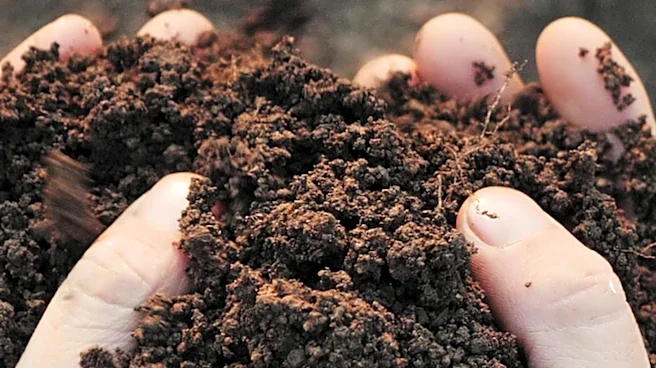
The practice of home composting holds significant importance for both individual households and broader environmental health. By converting organic waste into nutrient-rich compost, individuals can substantially improve the quality and fertility of their garden soil, reducing the need for chemical fertilizers. This 'black gold,' as gardeners often call it, enhances soil texture and provides essential nutrients for plant growth. On a larger scale, home composting contributes to waste reduction efforts by diverting organic materials from landfills. This diversion helps mitigate landfill overcrowding and reduces the production of methane, a potent greenhouse gas, which is released when organic matter decomposes anaerobically in landfills. Furthermore, promoting composting educates individuals about sustainable waste management practices and fosters a greater connection to ecological cycles, encouraging more environmentally conscious behaviors within communities.
What's Next?
Individuals interested in enhancing their composting skills can explore educational resources such as the Vermont Composting Short Course, which offers both online and in-person workshops. These courses provide detailed guidance on effective composting techniques, including proper material ratios, moisture management, and aeration methods. Local programs, like those in Grand Rapids, are also emerging to collect food scraps for processing, returning nutrient-rich resources to community gardens. This indicates a growing trend towards organized community-level composting initiatives that could expand to more areas. As awareness of environmental benefits increases, more municipalities may implement similar programs, further integrating composting into mainstream waste management strategies. Continued research and public education campaigns will likely focus on simplifying the composting process and highlighting its ecological advantages to encourage wider adoption.
Beyond the Headlines
Beyond its immediate benefits, home composting represents a fundamental shift towards a more circular economy at the household level. It challenges the linear 'take-make-dispose' model by transforming waste into a valuable resource. This practice fosters a deeper understanding of natural decomposition processes and the interconnectedness of ecosystems. Ethically, it promotes responsible stewardship of resources and reduces the environmental footprint of daily living. Culturally, the act of composting can reconnect individuals with the origins of their food and the cycles of nature, moving away from a consumerist mindset towards one of regeneration. In the long term, widespread adoption of home and community composting could lead to healthier urban soils, reduced reliance on synthetic agricultural inputs, and a more resilient local food system, contributing to overall ecological balance and community well-being.