
What's Happening?
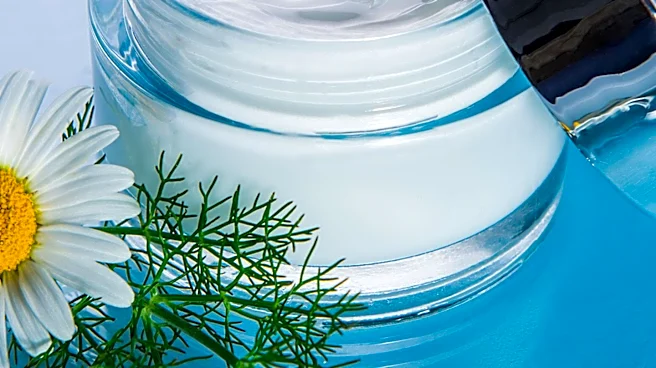
Barrier repair creams are formulated with specific ingredients like ceramides and niacinamide to help restore the skin's natural protective barrier. These creams are designed to avoid heavy occlusives
such as petrolatum or shea butter, which can trap heat and sebum, particularly in combination skin types. Instead, they focus on barrier mimicry, delivering essential lipids and humectants in lighter, often gel-cream, formulations. Products like Pevonia Age Correction Marine Collagen Cream are highlighted for their effectiveness, combining ceramides, hyaluronic acid, marine collagen, and peptides to offer both hydration and barrier support. The emphasis is on strengthening the skin's natural ability to retain moisture and defend against external aggressors without causing congestion or a heavy feeling. Consumers are advised to look for 'non-comedogenic' labels to ensure products do not clog pores.
Why It's Important?
The focus on barrier repair creams signifies a growing understanding in the skincare industry of the importance of maintaining a healthy skin barrier for overall skin health. A compromised skin barrier can lead to various issues, including dryness, sensitivity, inflammation, and increased susceptibility to environmental damage. By utilizing ingredients like ceramides and niacinamide, these creams help rebuild the lipid matrix of the skin, which is crucial for its protective function. This approach is particularly beneficial for individuals with sensitive, reactive, or combination skin, who often struggle with traditional heavy moisturizers. The shift towards lighter, non-comedogenic formulations allows for effective hydration and repair without exacerbating issues like acne or oiliness, promoting a more balanced and resilient complexion. This trend reflects a broader consumer demand for sophisticated yet gentle skincare solutions.
What's Next?
The continued evolution of barrier repair technology is expected to lead to more advanced formulations that cater to diverse skin needs. Future developments may include the integration of novel ingredients that further enhance barrier function and address specific concerns like microbiome imbalance or inflammatory pathways. Brands are likely to continue innovating with textures, offering even lighter and more rapidly absorbing options to suit different climates and preferences. There will also be an increased emphasis on transparency in labeling, with clearer indications of non-comedogenic properties and the precise concentrations of active ingredients. As consumer awareness of skin barrier health grows, the market for specialized barrier repair products is anticipated to expand, driving further research and development in this area.
Beyond the Headlines
The emphasis on barrier repair creams extends beyond mere cosmetic benefits, touching upon the fundamental science of skin physiology. A healthy skin barrier is not just about aesthetics; it's a critical component of the body's first line of defense against pathogens, irritants, and environmental stressors. The move away from heavy occlusives towards formulations that mimic the skin's natural composition reflects a deeper understanding of how skin functions optimally. This approach encourages a more holistic view of skincare, where supporting the skin's inherent capabilities takes precedence over aggressive treatments. Ethically, this trend promotes healthier skin practices, reducing the potential for irritation and long-term damage often associated with harsh or unsuitable products. Culturally, it signifies a shift towards preventative and restorative skincare, aligning with a broader wellness movement that values long-term health and resilience.