








What's Happening?
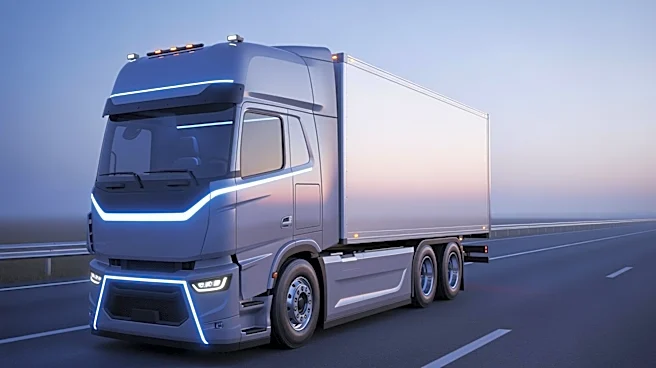
Humble Robotics, a San Francisco-based startup, is developing an electric, autonomous freight truck called the Humble Hauler. The company has raised $24 million to create a cabless truck that lacks traditional driving components like a steering wheel
and pedals. This innovation aims to reduce costs and carbon emissions in freight transportation. The California Department of Motor Vehicles recently revised regulations to allow autonomous trucks on public roads, provided they undergo extensive testing. However, labor groups, including the Teamsters, have expressed concerns about job security and safety. Humble Robotics plans to conduct initial tests in California, adapting to the new regulatory environment.
Why It's Important?
The introduction of autonomous freight trucks could significantly impact the transportation industry by reducing operational costs and emissions. However, it also raises concerns about job displacement for truck drivers, a significant workforce in California. The Teamsters and other labor groups are worried about the potential loss of jobs and safety issues associated with driverless trucks. The development of such technology could lead to a shift in the labor market, requiring new skills and roles. Additionally, the regulatory landscape will play a crucial role in determining the pace and extent of autonomous truck deployment.
What's Next?
Humble Robotics plans to begin customer pilots within the year, focusing on short-haul routes. The company will work with the California DMV to meet testing requirements and adapt to regulatory changes. As the technology progresses, it will face competition from other companies like Aurora and Kodiak, which are also developing autonomous trucks. The outcome of these developments will depend on regulatory approvals, public acceptance, and the ability to address safety and labor concerns. The company aims to partner with ports and shipping companies for initial deployments, potentially transforming freight logistics in California.
Beyond the Headlines
The move towards autonomous freight trucks highlights broader trends in automation and its impact on traditional industries. While the technology promises efficiency and environmental benefits, it also poses ethical and economic challenges. The transition to driverless trucks could lead to significant shifts in employment patterns, requiring new policies and support systems for affected workers. Additionally, the safety and reliability of autonomous vehicles will be under scrutiny, influencing public perception and regulatory decisions. The success of such innovations will depend on balancing technological advancements with societal needs and concerns.