
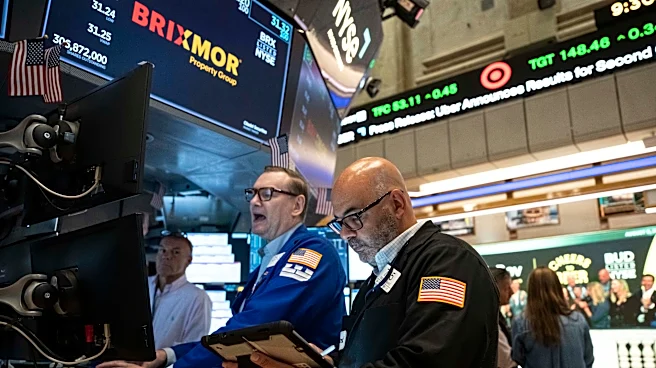

What's Happening?
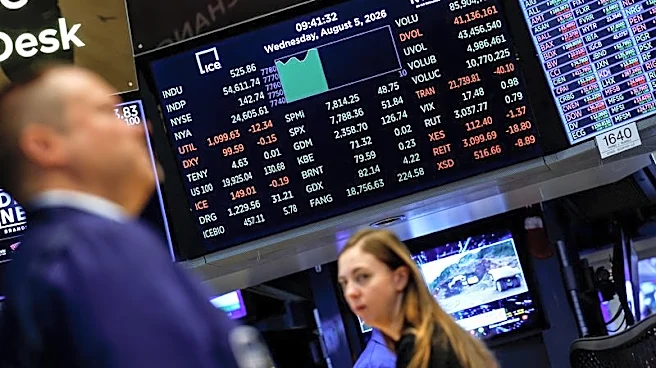
Investors are closely watching the upcoming jobs report, which is expected to show nonfarm payrolls expanding by 83,000 in July, according to economists polled by Dow Jones. The unemployment rate is anticipated to remain steady at 4.2%. However, predictions
vary, with Bank of America expecting a slightly lower payroll growth and Vanguard forecasting a minimal gain. The report comes amid mixed signals about the labor market's health, with recent data showing varied job growth and unemployment claims. The Federal Reserve's interest rate decisions could be influenced by the report's findings, adding to the market's anticipation.
Why It's Important?
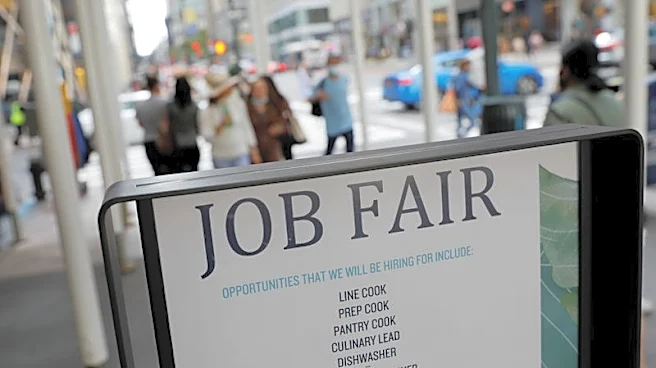
The jobs report is crucial as it provides insights into the U.S. labor market's health, influencing economic policy and investor decisions. A stable unemployment rate might lead to minimal market reactions, while unexpected changes could prompt shifts in investment strategies. The Federal Reserve's interest rate policies are closely tied to labor market conditions, and any significant deviations in the report could impact future rate hikes. Investors and businesses are keenly observing these developments, as they could affect economic growth, consumer spending, and overall market stability.
What's Next?
Depending on the report's outcome, the Federal Reserve may adjust its interest rate strategy, potentially raising rates to combat inflation if the labor market shows resilience. Investors will likely reassess their portfolios based on the report's implications, with potential shifts in stock and bond markets. Economic stakeholders will continue to monitor labor market trends, especially with upcoming challenges in entry-level hiring and new graduates entering the workforce. The report's findings could set the tone for economic policy and market dynamics in the coming months.