





What's Happening?
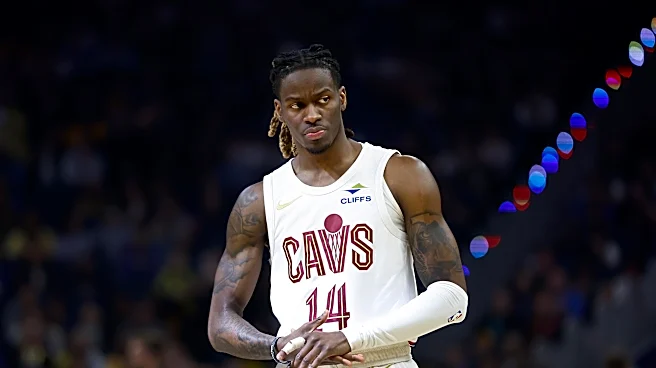
The Brooklyn Nets have signed free agent guard Keon Ellis to a two-year contract worth $18 million. The agreement includes a mutual option that guarantees the entire contract. Ellis, who is 26 years old, began his career with the Sacramento Kings and
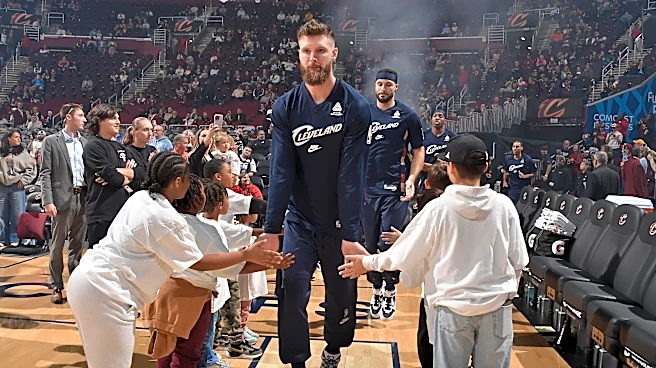
was later traded to the Cleveland Cavaliers. During his time with the Cavaliers, Ellis played nearly 25 minutes per game in the regular season, although his playing time decreased significantly during the playoffs. Known for his three-and-D capabilities, Ellis stands at 6-foot-5 and has consistently shot over 40% from the three-point line in three of his four seasons in the NBA. He was initially undrafted but was converted from a two-way contract by the Kings in 2024.
Why It's Important?
The signing of Keon Ellis by the Brooklyn Nets is significant as it strengthens their roster with a player known for his defensive skills and three-point shooting ability. This move could enhance the Nets' perimeter defense and provide additional scoring options from beyond the arc. For Ellis, this contract represents a substantial financial commitment and a vote of confidence in his abilities, potentially leading to a more stable role within the team. The Nets' decision to secure Ellis with a guaranteed contract reflects their strategy to build a competitive team capable of making a deep playoff run. This signing could also influence other teams' strategies in the free agency market, as they may look to secure similar versatile players.
What's Next?
With Keon Ellis joining the Brooklyn Nets, the team will likely focus on integrating him into their system and maximizing his strengths on the court. The Nets may also continue to explore additional roster moves to further solidify their lineup for the upcoming season. For Ellis, the next steps involve adapting to the Nets' playing style and establishing himself as a key contributor. His performance in the upcoming season will be crucial in determining his long-term role with the team. The mutual option in his contract suggests that both parties will evaluate the fit and performance at the end of the term, potentially leading to further negotiations.