






What's Happening?
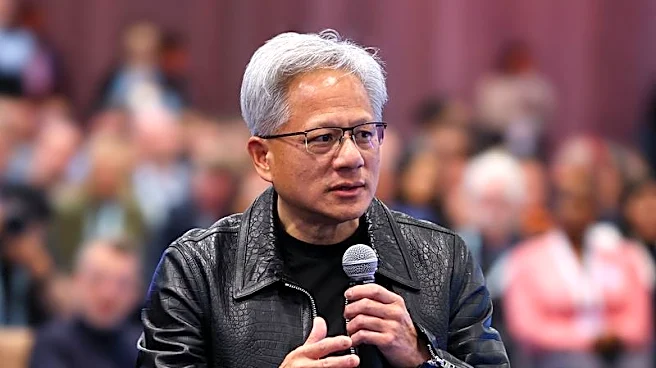
Jensen Huang, CEO of Nvidia, has revealed that his management style involves consistent and rigorous criticism of his more than 42,000 employees. He described this approach as "torturous," drawing parallels to the high expectations and critical feedback
he received from his Taiwanese parents. Huang stated in an interview with Singapore-based news channel CNA that he cannot be shown anything without offering some form of criticism, viewing it as a method to foster improvement rather than punishment. This management philosophy is presented as a key factor in Nvidia's success, which has seen its market capitalization exceed $5 trillion, making it a leading entity in the artificial intelligence boom.
Why It's Important?
This insight into Jensen Huang's management style is important for understanding the corporate culture at Nvidia, a company at the forefront of the AI revolution. His approach, while described as critical, aims to drive continuous improvement and innovation, which are crucial in the fast-paced technology sector. For U.S. businesses, this highlights a potentially effective, albeit demanding, leadership model that prioritizes excellence and constant refinement. It also sheds light on the high-pressure environment within leading tech companies, where employees are expected to meet stringent standards. The success of Nvidia under Huang's leadership suggests that such a management style, when focused on improvement, can yield significant results, influencing how other tech firms might approach talent development and performance management.
What's Next?
The revelation of Huang's management style could spark discussions within the U.S. corporate landscape about effective leadership in high-growth industries. Other companies might analyze whether a similar culture of rigorous feedback could benefit their innovation cycles, while also considering the potential impact on employee morale and retention. Nvidia, under this leadership, is expected to continue its trajectory as a dominant force in AI, with its internal culture likely playing a role in its ability to innovate rapidly. This approach may also influence how future leaders are trained, emphasizing the importance of constructive criticism and a relentless pursuit of excellence in the tech sector.
Beyond the Headlines
Beyond the immediate business implications, Huang's management style raises broader questions about cultural influences on leadership and the psychological impact of constant criticism. His reference to his Taiwanese upbringing suggests a cultural context where high expectations and direct feedback are common. In a diverse U.S. workforce, such a style could be perceived differently, potentially leading to varied employee responses. This also prompts a deeper look into the balance between driving performance through critical feedback and fostering a supportive work environment. The long-term effects on employee well-being, creativity, and loyalty within such a demanding culture are areas for further consideration, highlighting the complex interplay between leadership, culture, and organizational success in the modern era.