






What's Happening?
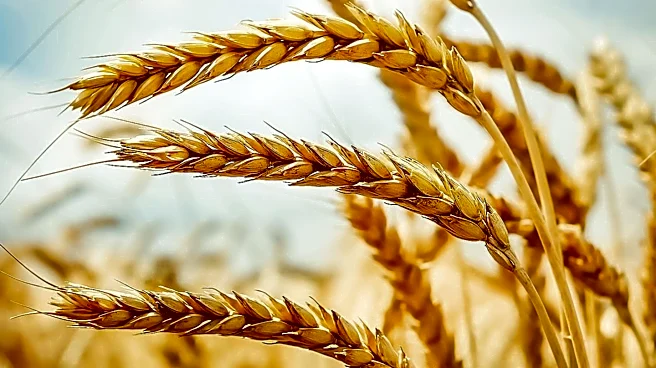
Chicago wheat prices have risen for the third consecutive week due to concerns over export disruptions from the Black Sea region. The Chicago Board of Trade's most-active wheat contract increased by 4.45% over the week, despite a slight dip on Friday.
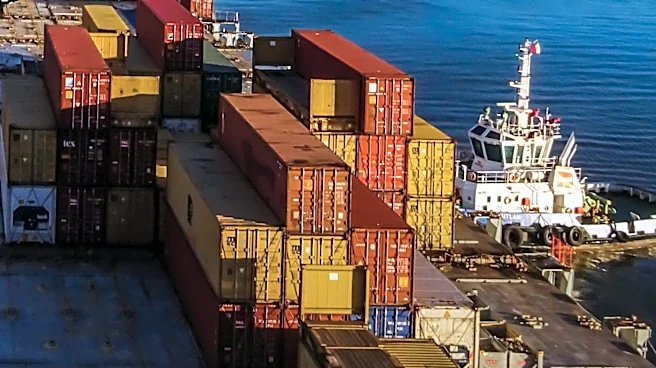
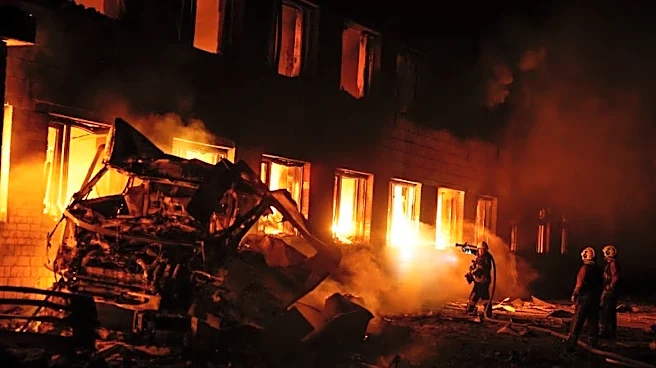
The closure of the Kerch Strait following strikes in Ukraine has contributed to these concerns, alongside deteriorating U.S. crop conditions. The International Grains Council maintained its global wheat production forecast for 2026/27 at 821 million metric tons but highlighted uncertainties regarding Black Sea supplies. The situation has also influenced corn and soybean markets, with both commodities experiencing slight gains over the past week.
Why It's Important?
The rising wheat prices underscore the global agricultural market's sensitivity to geopolitical tensions, particularly in key export regions like the Black Sea. Disruptions in this area can have significant ripple effects on global supply chains, affecting prices and availability of essential commodities like wheat. The situation highlights the interconnectedness of global markets and the potential for regional conflicts to impact food security and economic stability. For U.S. farmers and agricultural stakeholders, these developments could influence planting decisions, pricing strategies, and export opportunities. The ongoing geopolitical tensions and their impact on agricultural markets will be closely watched by industry analysts and policymakers.
What's Next?
The agricultural markets will likely remain volatile as geopolitical tensions in the Black Sea region persist. Analysts will monitor the situation closely, particularly any further disruptions to exports. The U.S. agricultural sector may need to adapt to changing market conditions, potentially exploring alternative export markets or adjusting production strategies. Policymakers may also consider measures to mitigate the impact of global supply chain disruptions on domestic markets. The situation's evolution will be critical for stakeholders across the agricultural supply chain, from producers to consumers.