



What's Happening?
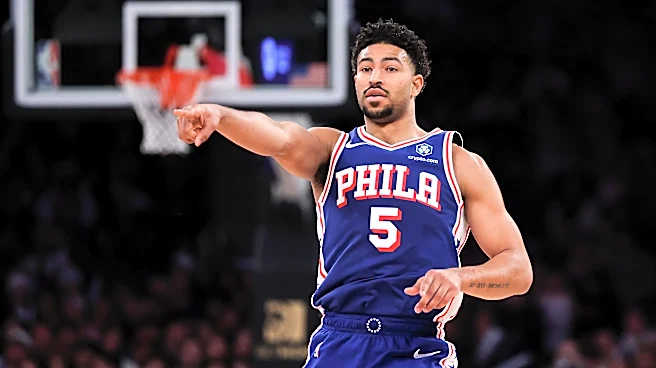
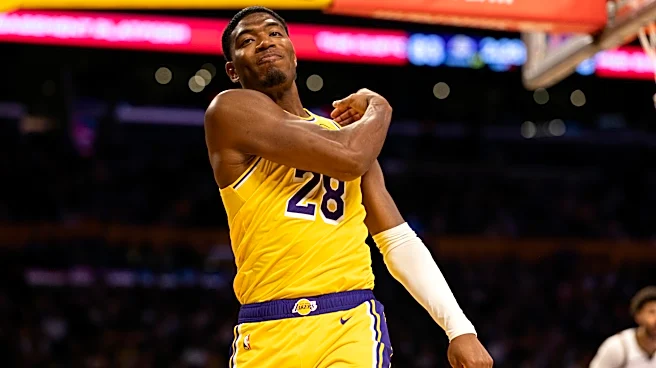
The Los Angeles Lakers have reached an agreement to sign Quentin Grimes, a former player for the Philadelphia 76ers, as part of their active roster reshuffle during the NBA free agency period. Grimes, known for his defensive skills and three-point shooting,
has agreed to a four-year contract worth $60 million, which includes a player option for the final year. This move is part of the Lakers' strategy to enhance their roster's depth and adaptability, particularly in the backcourt. Grimes averaged 13.4 points, 3.6 rebounds, and 3.3 assists per game in the 2025/26 season, making him a valuable addition for the Lakers, who aim to have more versatile players capable of contributing both offensively and defensively.
Why It's Important?
The acquisition of Quentin Grimes is significant for the Lakers as it addresses their need for a more robust and flexible roster. Grimes' ability to defend the perimeter and contribute offensively without being the primary playmaker makes him an ideal fit for the Lakers' strategy. His presence is expected to provide the team with more options during critical game moments, especially in the playoffs where defensive and offensive versatility is crucial. For the Lakers, this move is not just about adding talent but also about building a team that can sustain performance throughout the season and into the playoffs. The contract's player option also gives Grimes the flexibility to reassess his market value, which could be beneficial for both the player and the team.
What's Next?
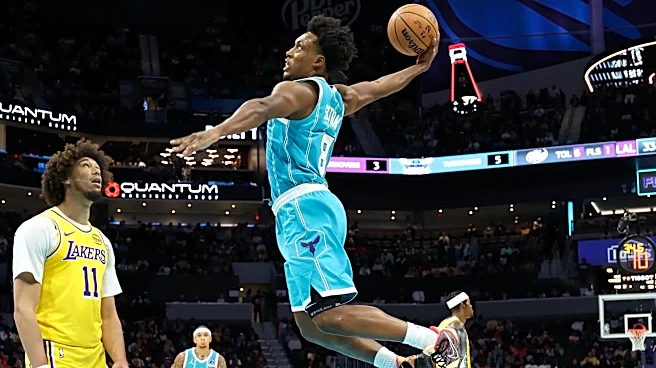
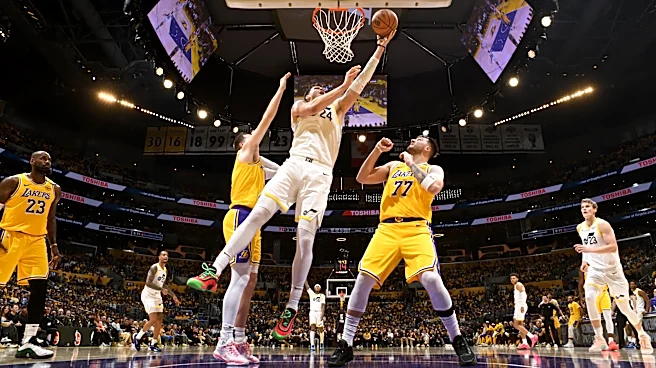
The agreement with Grimes is part of a broader strategy by the Lakers to revamp their roster. Alongside Grimes, the Lakers have also reached agreements with other players like Collin Sexton and Sandro Mamukelashvili, aiming to strengthen both their backcourt and frontcourt. The official signing of these agreements is expected to occur after the NBA's moratorium period ends on July 6, 2026. The Lakers' management will likely focus on integrating these new players into their system, ensuring that they complement the existing team dynamics. The success of these moves will depend on how well the new acquisitions adapt to the Lakers' playing style and contribute to the team's overall performance.