


What's Happening?
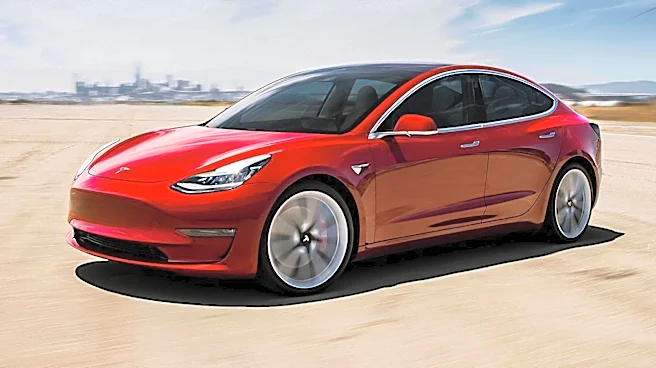
Tesla has announced significant upgrades to its Model 3 lineup in the US, Puerto Rico, and Mexico. All Model 3 vehicles in these regions will now feature a larger 16-inch center touchscreen, replacing the previous 15.4-inch unit. This update applies across
all trims, including the base Model 3 RWD. Additionally, the Model 3 Performance variant receives a black headliner, an increased EPA-estimated range of 316 miles (up from 309 miles), and an improved peak power output of 528 hp. The Model 3 Premium AWD also sees an acceleration boost, now achieving 0 to 60 mph in 3.8 seconds, down from 4.2 seconds. These enhancements follow a similar rollout in China and aim to refresh the Model 3's appeal in key markets. Despite these upgrades, the base price of the Model 3 remains unchanged, starting at $36,990.
Why It's Important?
These upgrades are important for Tesla's competitive standing in the electric vehicle market, particularly in North America. The introduction of a larger standard touchscreen and performance enhancements for the Model 3 aims to maintain consumer interest and address evolving expectations in the EV segment. With increasing competition from other automakers, continuous product improvement is crucial for Tesla to retain its market share and brand appeal. The unchanged base price, despite the added features, could make the Model 3 a more attractive option for potential buyers, potentially stimulating sales. This move also highlights Tesla's strategy of rolling out updates to its existing models to keep them fresh, rather than solely relying on new model introductions. The focus on performance and interior technology reflects current consumer trends in the automotive industry, where advanced features and driving dynamics are key differentiators.
What's Next?
Tesla's immediate next steps will likely involve monitoring the market reception of these updated Model 3 vehicles. The company may also consider extending similar upgrades to other regions, such as Canada, which currently still features the smaller screen. While these updates are significant, the source notes that certain features available in other markets, like vehicle-to-load (V2L) capabilities and new interior color options, are still not available in the US Model 3. Future updates could potentially address these disparities. Tesla will also continue to focus on its broader strategic initiatives, including autonomous driving, AI, and robotics, which investors are increasingly scrutinizing for long-term growth. The company has several product events on its calendar, including public rides for the Cybercab and the rescheduled Roadster demonstration, which could further influence market perception and investor confidence.
Beyond the Headlines
Beyond the immediate product enhancements, these updates reflect a broader trend in the automotive industry towards integrating more advanced technology and offering continuous improvements to existing models. The standardization of a larger touchscreen across all Model 3 trims suggests a commitment to a premium user experience, which is becoming a critical factor for EV buyers. The performance and range boosts, achieved without a price increase, could also indicate efficiencies in production or a strategic move to offer more value to consumers. This approach could set a precedent for how established EV manufacturers compete with newer entrants and traditional automakers transitioning to electric. The absence of features like V2L in the US Model 3, despite its availability in China, highlights regional market differences and regulatory landscapes that influence product offerings, suggesting a complex global strategy for Tesla.