








What's Happening?
Andrew Heiskell, Equity Strategist, and Gordon Lawrence, Director of Global Derivatives at Wellington Management, discussed the significant transformations occurring in equity markets over the past two decades. They highlighted the persistent rise of passive
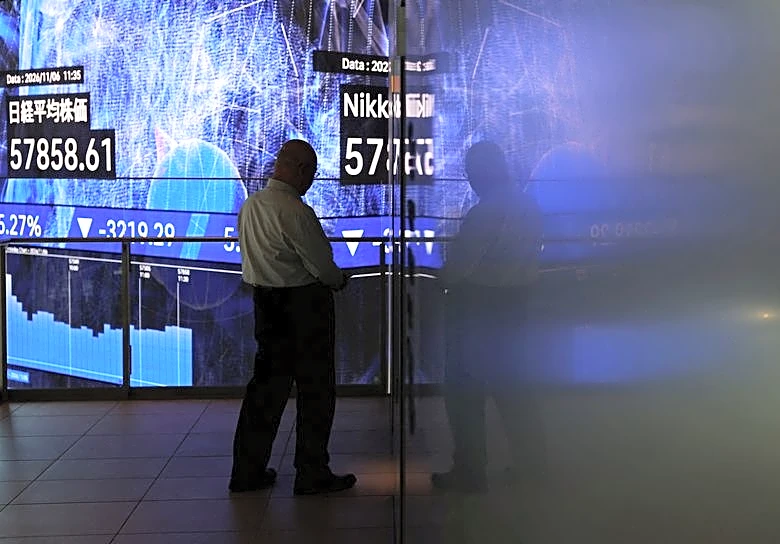
investing and ETFs, increased retail participation, shifts in the hedge fund landscape, and changes in market liquidity dynamics. These factors, coupled with market concentration around a few large companies and the pervasive influence of artificial intelligence (AI), have reshaped investor behavior and made generating consistent alpha more challenging. Lawrence described the current market as a 'duck market,' appearing calm on the surface but experiencing significant underlying turmoil and volatility, which he attributes to 'alpha fragility' and 'beta fragility.'
Why It's Important?
The insights from Wellington Management are crucial for understanding the current complexities faced by active managers in U.S. equity markets. The shift from active to passive investing has reduced the influence of traditional fundamental investors, allowing retail investors and multi-strategy hedge funds, often operating with high leverage and short-term focus, to exert greater impact. This dynamic creates rapid boom-bust cycles and significant dislocations in individual stocks and themes. The concept of 'beta fragility' stems from regulatory changes post-Global Financial Crisis, which shifted liquidity provision from large banks to algorithmic market makers with smaller balance sheets, leading to reduced liquidity during volatile periods. 'Alpha fragility' arises from the rapid shifts in market narratives, particularly with AI, where capital rushes into themes quickly and exits just as fast, making it difficult for active managers to consistently outperform.
What's Next?
Active managers will need to adapt their processes, rather than their core investment philosophies, to navigate these evolving market dynamics. According to Lawrence, a key focus should be on 'situational awareness' – understanding who else is involved in trades and how they are playing the game. This involves gaining explicit information on positioning, especially from faster-moving capital, to anticipate rapid shifts and potential dislocations. The rise of AI is expected to further accelerate market narratives and positioning, making participants faster but also potentially increasing market fragility due to consensus-driven behavior. Investors may need to unlearn past behaviors of not hedging or diversifying, as the current environment of high dispersion and low correlations, while offering opportunity, also presents significant risks if not managed with agility and a clear understanding of market participants' actions.
Beyond the Headlines
The discussion delves into the fundamental debate of whether markets are becoming more or less efficient due to these changes. While AI can make asset prices reflect consensus faster, it also introduces new forms of risk and fragility. The 'duck market' phenomenon, where index-level calm masks underlying volatility, can lead investors to a false sense of security, discouraging hedging and diversification. This environment challenges the traditional active management approach of building portfolios from a 'blank sheet of paper,' suggesting a need to start with the market's existing themes and identify differentiated views. The increasing dispersion and churn of winners and losers, even within specific themes like AI, demand a more nimble and adaptive investment strategy, highlighting the need for continuous process improvement to capture alpha opportunities in a rapidly changing landscape.