










What's Happening?
The self-driving bus market is experiencing rapid growth as cities worldwide, including those in the U.S., seek smarter and more efficient transportation solutions. This market expansion is driven by advancements in technology and the increasing challenges
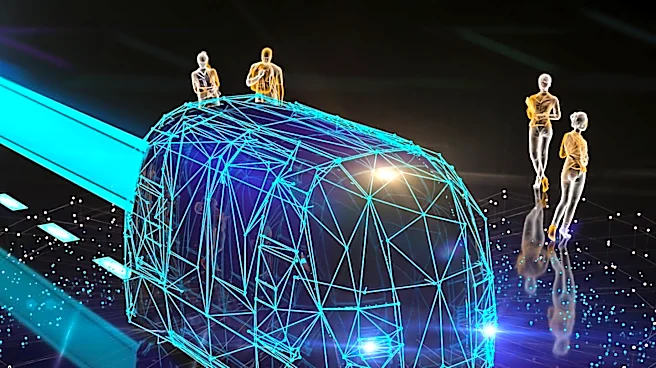
of urban congestion. Self-driving buses, which operate without human drivers using sensors, cameras, and artificial intelligence, are designed to enhance public transportation by improving safety, operational efficiency, and accessibility. The market is projected to grow from $1.2 billion in 2025 to $1.52 billion in 2026, with a compound annual growth rate (CAGR) of 27.0%. This growth is attributed to the need for efficient public transport, high operational costs of human-driven buses, and a focus on road safety.
Why It's Important?
The growth of the self-driving bus market is significant for several reasons. It addresses the urgent need to reduce traffic congestion in urban areas, which is exacerbated by rapid urbanization and increasing vehicle ownership. Self-driving buses offer high-capacity transport with optimized routing and minimal human error, which can improve traffic efficiency and reduce idle times. This development is crucial for U.S. cities facing similar congestion challenges. Additionally, the adoption of autonomous buses supports sustainable, low-emission transit options, aligning with broader environmental goals. The market's expansion also reflects a shift towards smart city projects and autonomous mobility programs, which are becoming increasingly important in urban planning.
What's Next?
Looking ahead, the self-driving bus market is expected to continue its rapid growth, reaching $3.99 billion by 2030. This growth will be driven by the expansion of smart city initiatives, wider adoption of electric autonomous bus fleets, and improvements in AI-powered navigation systems. Increased investment in connected vehicle infrastructure and the demand for sustainable transit options will further propel the market. As the technology matures, U.S. cities may see more pilot programs and deployments of self-driving buses, potentially transforming public transportation systems and urban mobility.
Beyond the Headlines
The rise of self-driving buses also raises important ethical and legal considerations. Issues such as data privacy, cybersecurity, and the impact on employment in the transportation sector need to be addressed. The transition to autonomous vehicles may lead to job displacement for drivers, necessitating workforce retraining and policy interventions. Additionally, the integration of self-driving buses into existing transportation networks will require careful planning and collaboration between public and private sectors to ensure safety and efficiency.