





What's Happening?
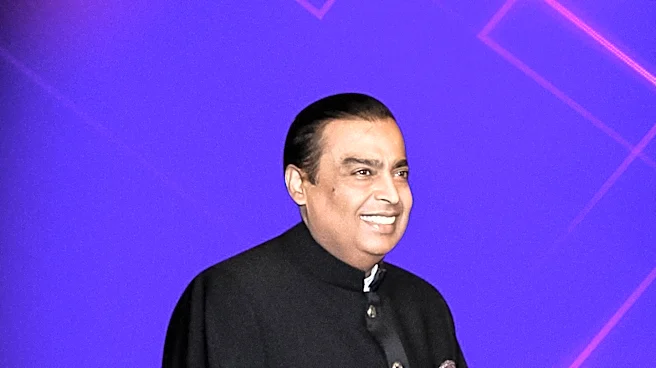
Mukesh Ambani, chairman and managing director of Reliance Industries, is actively implementing a succession strategy for his business empire. This involves his children taking on significant leadership roles within the company. Akash Ambani has assumed
leadership of Jio, while Isha Ambani is spearheading key retail initiatives. Anant Ambani is expanding his involvement in various Reliance businesses. This strategic move signifies a new phase of leadership for one of India's most influential business families, aiming to ensure the long-term continuity and legacy of Reliance Industries. The company has undergone a significant transformation over the past two decades, evolving from a textiles and petrochemicals powerhouse into a diversified conglomerate under Mukesh Ambani's guidance.
Why It's Important?
This succession strategy is important as it addresses the critical issue of leadership transition in large, family-controlled conglomerates. By integrating the next generation into key leadership positions, Mukesh Ambani is working to secure the future stability and direction of Reliance Industries. This proactive approach can prevent potential power vacuums or disputes that often arise in such transitions, ensuring a smoother continuation of business operations and strategic growth. For stakeholders, this clarity in leadership can provide confidence in the company's long-term vision and operational consistency. The involvement of the next generation in specific sectors like telecom (Jio) and retail also indicates a focus on modern, high-growth areas, aligning the company with future economic trends and technological advancements.
What's Next?
The continued integration of Akash, Isha, and Anant Ambani into their respective leadership roles will likely see them further solidify their influence and strategic direction within Reliance Industries. This could lead to new initiatives and expansions in the sectors they oversee, such as further innovation in telecommunications under Akash Ambani or significant growth in retail ventures led by Isha Ambani. The expansion of Anant Ambani's role suggests a broader involvement across the conglomerate's diverse portfolio. The success of this succession plan will be closely watched as a model for other large family businesses navigating similar transitions, potentially influencing corporate governance and leadership development strategies in the broader business landscape.
Beyond the Headlines
The succession strategy at Reliance Industries highlights a broader trend in global family-owned businesses: the delicate balance between maintaining family control and ensuring professional, dynamic leadership. This move by Mukesh Ambani underscores the importance of proactive planning for business continuity and legacy building, rather than reactive measures. It also reflects a strategic shift towards empowering younger leaders who may bring fresh perspectives and adapt more readily to evolving market demands and technological disruptions. The success of this transition could set a precedent for how large, diversified conglomerates manage intergenerational transfers of power, influencing not only business practices but also the economic landscape of nations where such family enterprises hold significant sway.