






What's Happening?
Bob Naerebout, 74, recently retired as government affairs director for the Idaho Dairymen’s Association (IDA), and his son, Rick Naerebout, 47, has been CEO since 2017. They have worked together at IDA since November 2002, with Bob initially serving as executive
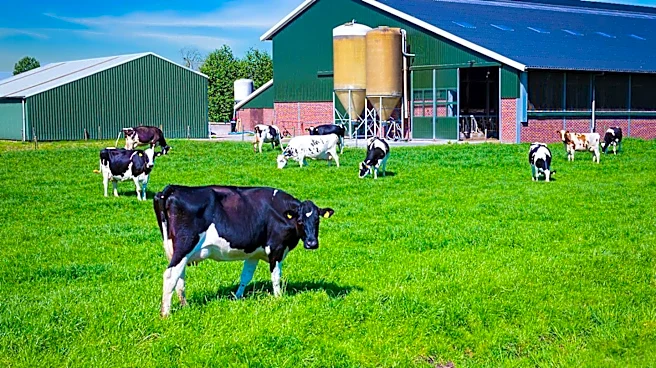
director and Rick as a management assistant. The Naerebouts have witnessed significant growth in Idaho's dairy industry, with the state's milk cow population more than doubling since 2002 to an estimated 735,000, making Idaho the third-largest dairy state. Jamie Neill joined the association as government affairs director in October, ahead of Bob Naerebout's retirement. Neill previously worked as policy director for Gov. Brad Little and as government affairs director for the Idaho Medical Association, and also worked in Washington, D.C., for Rep. Mike Simpson, R-Idaho, and Rep. Doc Hastings, R-Wash. The IDA, with approximately 350 members, focuses on advocating for Idaho's dairy farm families at both state and federal levels, including efforts for immigration reform to address the year-round labor needs of the dairy industry.
Why It's Important?
The growth of Idaho's dairy industry, as highlighted by the Naerebouts, signifies a substantial economic shift within the state and contributes significantly to the national agricultural landscape. Idaho's rise to the third-largest dairy state indicates a successful adaptation to market demands and operational efficiencies, attracting producers from other regions like California. This expansion, however, has brought challenges, including increased regulatory scrutiny regarding waste management and environmental impacts. The IDA's proactive approach to funding research on environmental impacts and providing technical support to farms is crucial for sustainable growth and maintaining public trust. Furthermore, the association's advocacy for immigration reform underscores a critical labor issue facing the U.S. agricultural sector. The reliance on a foreign-born workforce for year-round operations in dairy farming highlights a national economic vulnerability and the need for comprehensive policy solutions to ensure food security and industry stability.
What's Next?
The Idaho Dairymen's Association will continue its advocacy efforts at both state and federal levels, particularly focusing on immigration reform to address the year-round labor needs of the dairy industry. With Jamie Neill now serving as government affairs director, the association will likely maintain its proactive stance on policy issues affecting dairy farmers. The ongoing research into environmental impacts and nutrient management will guide future practices and regulatory compliance within the industry. As the dairy sector continues to grow, the IDA will need to navigate increasing complexities related to land use, environmental regulations, and community relations. The association's commitment to being producer-controlled and its active board suggest a continued focus on the needs and concerns of its members, ensuring that the industry's voice is heard in policy discussions. The success of these efforts will be vital for the sustained growth and economic contribution of Idaho's dairy sector.
Beyond the Headlines
The narrative of Idaho's dairy industry growth, as observed by the Naerebouts, reflects broader trends in U.S. agriculture, where regional shifts and consolidation are common. The relocation of dairy operations from urbanizing areas like California to states with more available land and resources, such as Idaho, illustrates the dynamic nature of agricultural economics. This shift, while economically beneficial for the receiving states, often brings new challenges related to infrastructure, environmental management, and social integration within local communities. The IDA's efforts to improve the industry's image and address community frustrations highlight the evolving social contract between large-scale agriculture and the public. Moreover, the emphasis on immigration reform points to a systemic issue in the U.S. labor market, where certain sectors, particularly agriculture, are heavily reliant on immigrant labor. The long-term implications of this reliance, coupled with ongoing debates about immigration policy, will continue to shape the future of food production and rural economies across the nation.