






What's Happening?
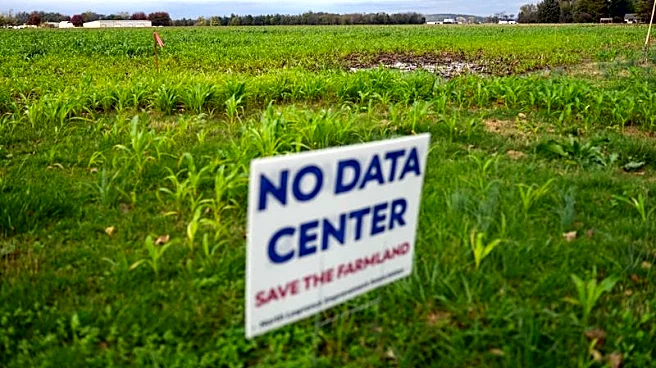
The stock market experienced a significant sell-off following the midterm elections, driven by renewed concerns over artificial intelligence (AI). This market reaction is attributed to growing fears among voters regarding AI, particularly a pushback against
critical data centers. The midterm results have compounded existing anxieties about potential heightened scrutiny of AI technologies, alongside ongoing worries about runaway spending and rising national debt. This post-midterm market downturn reflects investor apprehension about the future regulatory landscape for AI and its broader economic implications. The sell-off indicates a lack of confidence in the immediate economic outlook, with AI-related concerns playing a pivotal role in this sentiment shift. The market's volatility underscores how technological advancements and public perception can directly influence financial stability.
Why It's Important?
This market plunge is significant because it highlights the growing influence of public sentiment and political outcomes on the technology sector, specifically AI. Investor anxiety over potential increased scrutiny of AI could lead to reduced investment in AI development and infrastructure, impacting innovation and economic growth. The pushback against data centers, a critical component of AI operations, signals a potential hurdle for the expansion of AI technologies. This could affect companies heavily invested in AI, leading to slower development cycles or increased operational costs due to regulatory changes. Furthermore, it underscores a broader societal debate about the role and control of AI, which could translate into new policies affecting various industries, from tech giants to smaller startups relying on AI solutions. The market's reaction serves as an early indicator of how political shifts can directly influence technological progress and economic stability.
What's Next?
In the immediate future, market analysts will closely monitor legislative developments and public discourse surrounding AI. The renewed anxiety could prompt lawmakers to consider new regulations or oversight mechanisms for AI technologies and data centers, potentially leading to policy debates in the coming congressional sessions. Companies in the AI sector may face increased pressure to address public concerns regarding data privacy, ethical AI development, and the environmental impact of data centers. This could lead to industry-wide initiatives for greater transparency and responsible AI practices. Investors will likely remain cautious, seeking clarity on future regulatory environments before making significant commitments. The ongoing discussion around AI's societal impact, amplified by these market reactions, will shape both technological innovation and public policy in the near term.
Beyond the Headlines
The market's reaction to 'AI anxiety' reveals a deeper societal unease about the rapid advancement of artificial intelligence. Beyond immediate financial implications, this sentiment reflects concerns about job displacement, ethical dilemmas in AI decision-making, and the concentration of power in tech companies. The pushback against data centers also touches upon environmental concerns, such as energy consumption and land use, which are becoming increasingly salient in public discourse. This development could signal a shift towards a more critical public and governmental stance on technological progress, where innovation is increasingly weighed against its broader societal and environmental costs. It may also foster a demand for greater public participation in shaping technology policy, moving beyond purely economic considerations to encompass ethical and social dimensions.