





What's Happening?
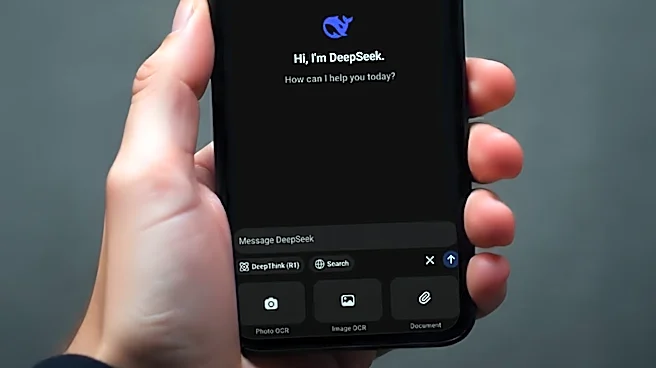
Chinese artificial intelligence start-up DeepSeek has introduced a plan for a more autonomous AI agent, referred to as a 'super agent.' This new system is designed to manage multiple tasks with minimal human intervention, aiming to enhance efficiency
in complex workflows. According to a technical article published by DeepSeek Harness, the super agent seeks to reduce the necessity for humans to coordinate various AI agents and oversee their progress. This development positions DeepSeek as a direct competitor to U.S. AI leaders like OpenAI and Anthropic, particularly in the realm of developing advanced coding assistants. The company highlights that advancements in AI models have led to the creation of agents capable of automating a wide array of tasks, including calendar management, email drafting, report preparation, and code writing.
Why It's Important?
This development is significant for the U.S. technology sector as it intensifies the global competition in artificial intelligence, particularly in the domain of AI agents and coding assistants. U.S. companies like OpenAI and Anthropic, currently at the forefront of AI innovation, will face increased pressure to accelerate their research and development to maintain their competitive edge. The emergence of more autonomous AI agents could revolutionize various industries by streamlining operations, reducing human workload, and potentially increasing productivity across sectors. However, it also raises questions about the future of work and the skills required in an increasingly AI-driven economy. Companies that successfully integrate such advanced AI agents could gain a substantial market advantage, while those that lag might face challenges in efficiency and innovation.
What's Next?
The unveiling of DeepSeek's 'super agent' is likely to spur further innovation and competition among leading AI developers globally. U.S. AI companies, including OpenAI and Anthropic, are expected to respond by either enhancing their existing AI agent capabilities or introducing new, more advanced systems. This competitive environment could lead to faster development cycles and more sophisticated AI tools becoming available to businesses and consumers. Additionally, the focus on autonomous AI agents will likely prompt discussions among policymakers and industry leaders regarding ethical guidelines, regulatory frameworks, and the societal impact of increasingly independent AI systems. The next steps will involve further testing and deployment of these super agents, potentially leading to widespread adoption in various industries.
Beyond the Headlines
The introduction of DeepSeek's 'super agent' points to a broader trend in AI development: the move towards greater autonomy and reduced human oversight in AI systems. This shift has profound implications beyond mere technological advancement. Ethically, it raises questions about accountability when AI agents make decisions or errors without direct human intervention. Legally, it could necessitate new frameworks for liability and intellectual property, especially in areas like code generation. Culturally, the increasing capability of AI to perform complex tasks autonomously might reshape perceptions of human creativity and problem-solving. This development could also accelerate the debate on the long-term impact of AI on employment and the need for workforce reskilling, as AI agents become more integrated into daily operations and creative processes.