




What's Happening?
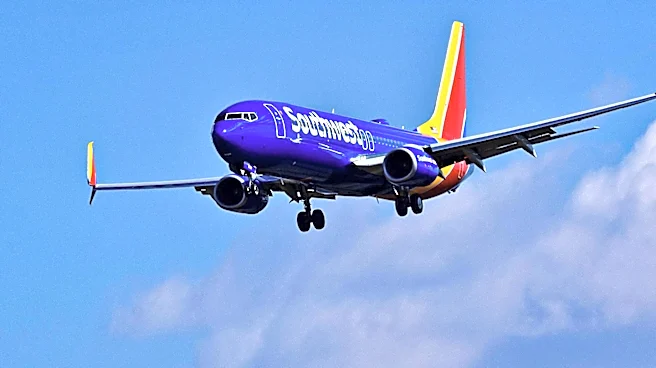
Southwest Airlines has implemented a strategy of raising fares and adding fees, moving away from its previous model of 'tranfarency' where the advertised price was all-inclusive. This shift includes charging for services that were once free, such as checked
luggage and certain boarding options. CEO Bob Jordan explained during Bernstein's 42nd Annual Strategic Decisions Conference that the airline's business has improved despite these changes. The company's March business revenues saw a 25% year-over-year increase, a trend that continued into April and May. Jordan noted that Southwest has participated in seven consecutive fare increases since February 1, driven by rising fuel costs, without experiencing a drop-off in demand. This indicates that consumers are not showing elasticity in the current fare environment, suggesting they are willing to pay for these additional costs and services.
Why It's Important?
This strategic shift by Southwest Airlines is significant as it marks a departure from its long-standing unique selling proposition of transparent pricing and inclusive services. Historically, Southwest differentiated itself by offering a 'no gotchas' pricing model, which fostered strong customer loyalty. By adopting industry-standard practices of unbundling services and adding fees, Southwest is aligning itself more closely with its competitors. This move could impact the competitive landscape of the U.S. airline industry, potentially leading other airlines to further solidify their own fee structures if Southwest's approach continues to prove successful. For consumers, it means a potential increase in overall travel costs on Southwest, and a reduction in the distinct advantages that once made the airline a preferred choice for many budget-conscious travelers. The success of this strategy suggests a broader consumer acceptance of unbundled pricing in the airline sector, even among previously loyal customers.
What's Next?
Southwest Airlines is likely to continue monitoring consumer response to its updated pricing and fee structure. CEO Bob Jordan has indicated that the airline is becoming more optimistic about its ability to cover fuel increases with revenue increases, and he questioned the stickiness of these price hikes if fuel costs were to abate. This suggests that even if fuel prices decrease, Southwest may not necessarily lower its fares, aiming to maintain its improved revenue streams. The airline will also likely continue to explore additional ancillary revenue opportunities, such as selling seat choice and extra legroom, to further pad its bottom line. Competitors will be closely watching Southwest's financial performance and customer retention rates to assess the long-term viability of this strategy, potentially influencing their own pricing decisions and service offerings in the future.
Beyond the Headlines
The shift in Southwest Airlines' business model reflects a broader trend in the U.S. airline industry towards maximizing revenue through ancillary fees and unbundled services. This evolution challenges the traditional notion of customer loyalty being solely based on transparent, all-inclusive pricing. Instead, it suggests that factors like route network, schedule convenience, and perceived value for specific add-ons are increasingly influencing consumer choices. The airline's ability to raise prices and add fees without alienating its customer base could indicate a fundamental change in consumer expectations regarding air travel, where passengers are now more accustomed to paying for extras. This could lead to a more uniform pricing model across the industry, potentially diminishing the unique brand identities that airlines like Southwest once cultivated through their distinct service philosophies. The long-term ethical implication is whether airlines will continue to push the boundaries of unbundling, potentially making basic air travel less accessible or more frustrating for consumers.