










What's Happening?
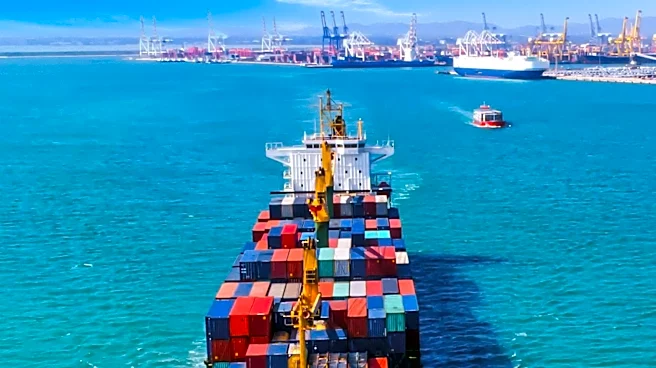
The shipping industry has made notable strides in safety over the past decade, according to recent data from global insurer Allianz. Despite the challenges posed by geopolitical tensions and the emergence of poorly-maintained 'shadow fleets,' the number
of total losses involving vessels has decreased significantly. In 2025, there were only 43 total losses, compared to 127 in 2016. This improvement is attributed to enhanced safety measures, stronger regulations, and technological advancements. However, fires and explosions remain a concern, with 218 incidents reported in 2025, marking it as the second-highest year for such events in the decade.
Why It's Important?
The reduction in shipping losses is a positive development for the global maritime industry, indicating improved safety standards and risk management practices. This trend benefits shipowners, insurers, and global trade by reducing the likelihood of costly accidents and disruptions. However, the persistent threat of fires and explosions highlights ongoing challenges that need to be addressed. The industry's progress in safety is crucial for maintaining the reliability and efficiency of global supply chains, especially amid increasing geopolitical tensions that could impact maritime operations.
What's Next?
Looking ahead, Allianz anticipates that geopolitical tensions, such as the Russia-Ukraine conflict and the U.S.-Israel-Iran war, will continue to influence casualty numbers in the shipping industry. The insurer expects maritime commerce to face increased unpredictability due to fragmented trade routes, fluctuating fuel prices, and new regulatory demands. These factors are likely to reshape the industry's operating model, making maritime trade more complex and risk-exposed. Stakeholders will need to adapt to these changes by investing in safety technologies and developing strategies to mitigate emerging risks.