


What's Happening?
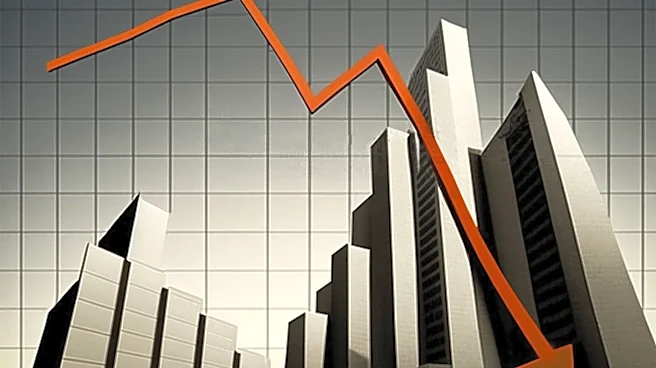
Gary Gensler, an MIT economist and former head of the US Securities and Exchange Commission, has publicly stated that the artificial intelligence (AI) industry is currently experiencing a 'bubble.' Speaking to CNN, Gensler drew parallels between the current AI investment
surge and historical technology bubbles, suggesting that significant investment in new technologies eventually reaches a plateau. He did not specify a timeline for when this bubble might burst or how severe the ensuing economic impact would be, but he advised investors to prepare for potential downturns by taking precautionary measures. This sentiment is echoed by concerns among investors who fear that the trillions of dollars being poured into AI may not yield sufficient returns in the near future. The rapid growth of companies like Anthropic, which has reportedly reached a $1.5 trillion valuation after its IPO in a short period, is cited as an unprecedented development contributing to uncertainty in the financial markets.
Why It's Important?
Gensler's warning carries significant weight due to his background as a former SEC head and economist, signaling potential instability in a rapidly expanding sector. His concerns highlight a broader anxiety within financial circles regarding the sustainability of current AI investment levels. The potential bursting of an AI bubble could have widespread repercussions across the U.S. economy, affecting venture capital firms, technology companies, and individual investors. A downturn could lead to job losses in the tech sector, a decrease in market valuations, and a general contraction of economic activity. Businesses that have heavily invested in AI tools are already facing exorbitant costs, which could further strain their finances if the anticipated returns do not materialize. This situation could lead to a re-evaluation of investment strategies and a more cautious approach to emerging technologies, potentially slowing innovation in the short term.
What's Next?
In the immediate future, investors and companies involved in the AI sector may begin to re-evaluate their strategies and financial exposures in light of these warnings. Gensler's advice to 'batten down some hatches' suggests a period of increased caution and risk management. This could manifest as a slowdown in new AI investments, a greater scrutiny of AI startups' valuations, and a focus on profitability rather than just growth. Companies heavily reliant on AI enterprise sales might face increased pressure to demonstrate tangible returns on investment to their customers, who are already concerned about high costs. The market may also see increased volatility as investors react to economic indicators and expert opinions on the AI industry's trajectory. Regulatory bodies might also begin to pay closer attention to the financial practices within the AI sector to prevent potential market instability.
Beyond the Headlines
The discussion around an AI bubble extends beyond immediate financial implications, touching upon the broader societal and technological landscape. The rapid influx of capital into AI has fueled unprecedented innovation, but a market correction could temper this pace, potentially impacting the development and deployment of beneficial AI applications. There's also an ethical dimension to consider; if the bubble bursts, it could lead to a 'winter' for AI research and development, similar to past tech downturns, which might delay progress on critical issues where AI could offer solutions. Furthermore, the 'fantasy-land salesmanship' mentioned in the context of pre-bubble industries raises questions about transparency and realistic expectations in the marketing of advanced technologies. A potential downturn could force a more grounded assessment of AI's capabilities and limitations, fostering a more sustainable and ethical development path for the technology in the long run.