


What's Happening?
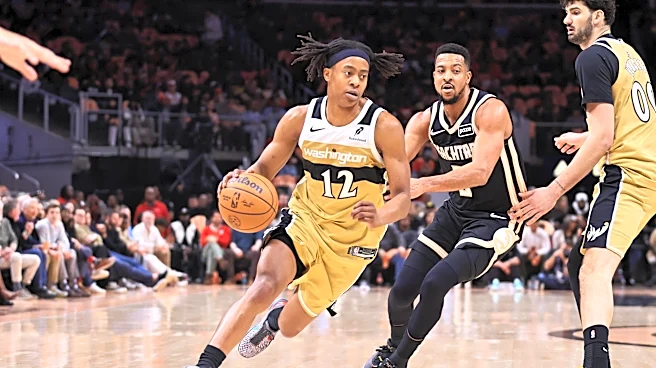
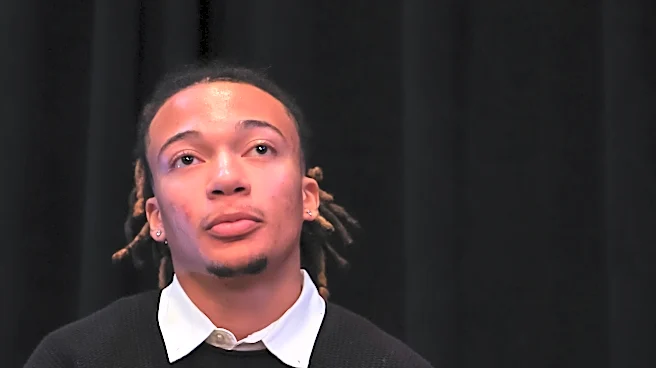
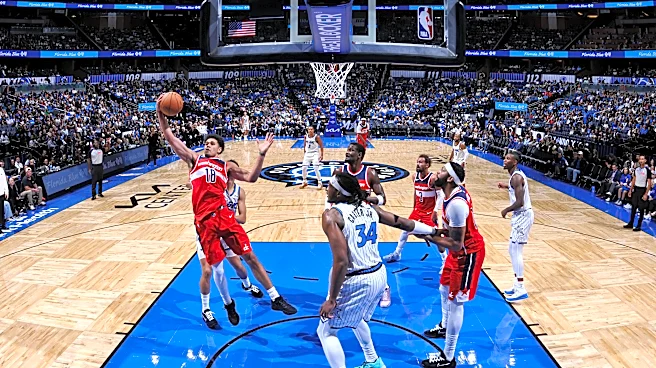
The Washington Wizards' bench, despite comprising veterans like Khris Middleton and Deandre Ayton, former lottery picks Tre Johnson and Bilal Coulibaly, and promising young players such as Will Riley, Bub Carrington, and Tre Mann, is underperforming.
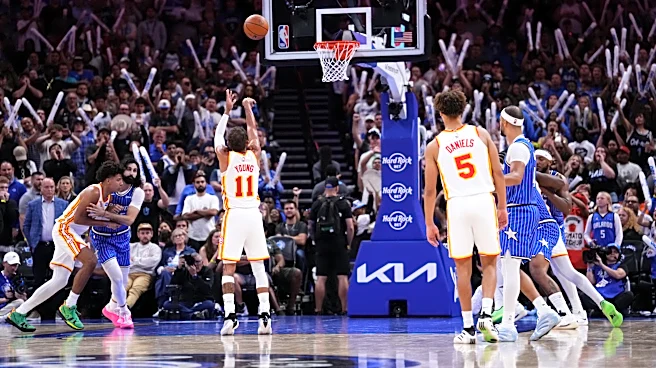
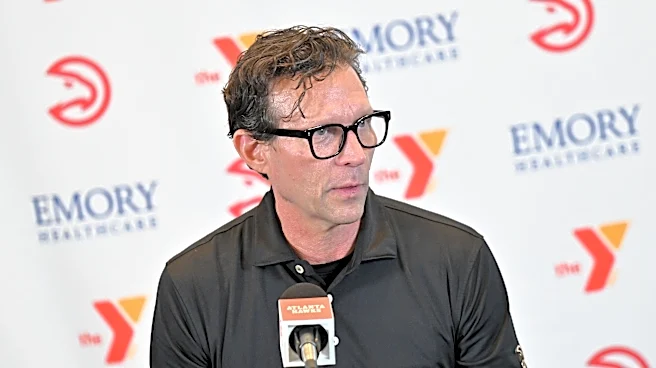
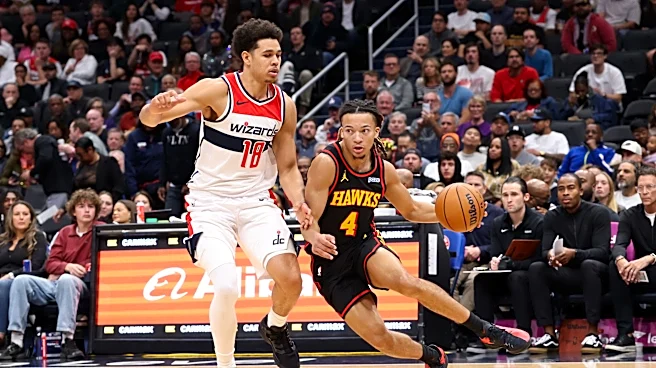
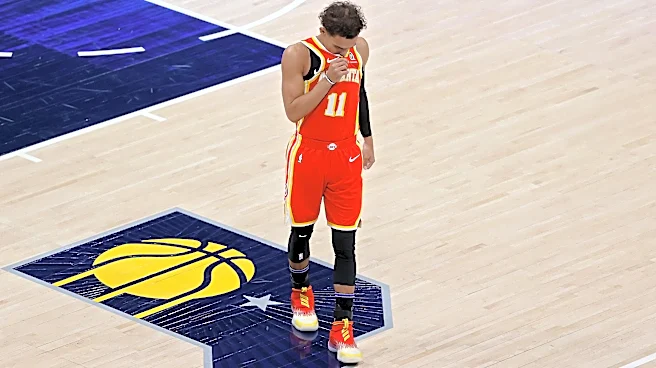
In a recent home game against the Atlanta Hawks, the Wizards' reserves were outscored 52-16, contributing to a 15-point loss. Head Coach Brian Keefe acknowledged the early stage of the season and the ongoing experimentation with different player combinations, expressing confidence in his team. However, the significant point differential from the bench units highlights a current struggle to translate individual talent into cohesive team production. The team is also noted for being last in the league in 3-pointers per game and fifth from the bottom in rebounds per contest.
Why It's Important?
The underperformance of the Washington Wizards' bench has significant implications for the team's overall competitiveness and strategic direction. A strong bench is crucial for NBA teams to maintain energy, depth, and consistent scoring throughout a game, especially during a long season. The current lack of production from a unit rich in individual talent suggests a systemic issue in player integration or tactical deployment. This situation could force the coaching staff to re-evaluate rotations, player roles, or even consider acquiring a dedicated backup ball-handler to facilitate better offensive flow. Without improved bench play, the Wizards risk continued struggles, potentially impacting their standing in the Southeast Division and their playoff aspirations. The disparity in bench scoring against the Hawks underscores a vulnerability that opposing teams can exploit.
What's Next?
The Washington Wizards are set to face the Atlanta Hawks again, providing an immediate opportunity to address the issues highlighted in their previous encounter. Coach Keefe's strategy for integrating his bench players and improving their collective output will be closely watched. The team may explore adjustments to their lineup or play-calling to better utilize the talents of players like Johnson, Carrington, and Ayton. The need for a backup ball-handler to orchestrate the second unit's offense is a potential area for future action, either through internal development, such as giving Kyshawn George more minutes with the reserves, or through external acquisition. The ongoing season will reveal whether the Wizards can unlock the full potential of their bench and improve their overall team performance.
Beyond the Headlines
The challenge faced by the Washington Wizards' bench extends beyond mere statistics; it touches upon the complex dynamics of team chemistry and strategic leadership in professional sports. The presence of individual talent does not automatically guarantee collective success, highlighting the importance of coaching in fostering synergy and defining roles. This situation could serve as a case study in how a collection of skilled players can struggle without a clear facilitator or a well-defined system. It also raises questions about player development and the transition of promising young talent into effective NBA contributors. The team's ability to overcome this hurdle will not only impact their immediate season but also inform future roster construction and coaching philosophies regarding bench management.