




What's Happening?
Kyle Bass, founder and co-CEO of Rochefort Asset Management, was featured on CNBC's 'Power Lunch' to discuss the market's response to the latest developments concerning the closure of the Strait of Hormuz. His interview focused on analyzing the immediate
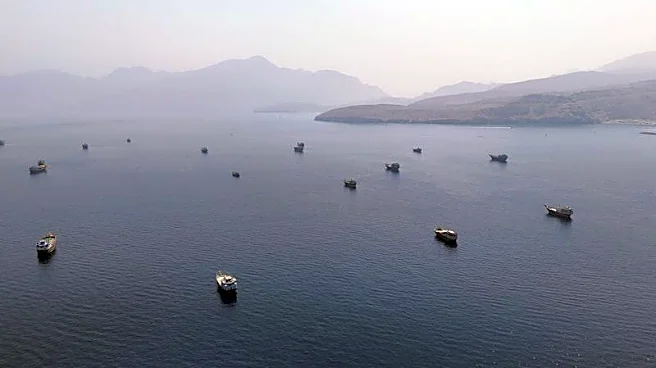
and potential long-term impacts of such a geopolitical event on global financial markets. The Strait of Hormuz is a critical chokepoint for global oil shipments, and any disruption there typically triggers significant reactions in energy markets and, consequently, broader economic sectors. Bass provided his expert perspective on how investors are processing this information and adjusting their strategies in response to the heightened geopolitical risk.
Why It's Important?
The closure or threat of closure of the Strait of Hormuz carries immense importance for the U.S. and global economies due to its role in international oil trade. A significant portion of the world's oil supply passes through this strait, making any disruption a direct threat to energy security and price stability. For the U.S., this could lead to higher gasoline prices, increased operational costs for businesses, and potential inflationary pressures, impacting consumer purchasing power and economic growth. Industries heavily reliant on oil, such as transportation and manufacturing, would face significant challenges. Geopolitical tensions in this region also influence defense spending and foreign policy, affecting national priorities and international relations. Kyle Bass's analysis helps to contextualize these risks for investors and policymakers.
What's Next?
Following discussions on geopolitical events like the Strait of Hormuz situation, market participants will likely remain highly sensitive to any further developments in the region. Energy prices, particularly oil, will be under close scrutiny, and any escalation or de-escalation of tensions could lead to rapid market shifts. Businesses, especially those with global supply chains, may begin to assess and implement contingency plans to mitigate potential disruptions. Governments, including the U.S., will continue diplomatic efforts and strategic planning to ensure energy supply stability and protect international shipping lanes. Further expert analyses and news reports will be crucial in guiding responses from investors, industries, and political leaders as the situation evolves.
Beyond the Headlines
The implications of geopolitical events like the potential closure of the Strait of Hormuz extend far beyond immediate market fluctuations. Such incidents highlight the fragility of global supply chains and the interconnectedness of energy markets with international security. They can accelerate shifts towards alternative energy sources and domestic production, influencing long-term investment in renewable technologies and energy independence. Furthermore, these events often underscore the complex relationship between economic stability and political stability, demonstrating how regional conflicts can have far-reaching global economic consequences. The discussions also bring to light the strategic importance of international maritime routes and the continuous need for diplomatic solutions to prevent economic disruptions and maintain global peace.