

What's Happening?
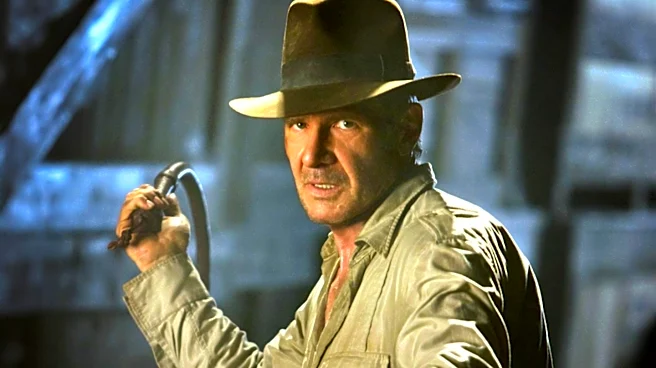
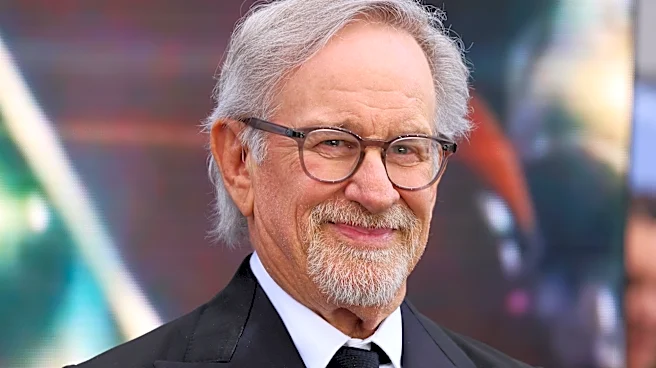
Renowned director Steven Spielberg has publicly stated his dissatisfaction with his 1984 film, 'Indiana Jones and the Temple of Doom,' the second installment in the Indiana Jones franchise. Despite its commercial success, grossing $333 million at the box
office, Spielberg admitted he was 'not happy with Temple of Doom at all.' He described the film as 'too dark, too subterranean, and much too horrific,' even suggesting it 'out-poltered Poltergeist.' Spielberg felt that the movie lacked his personal touch, stating, 'There’s not an ounce of my own personal feeling in Temple of Doom.' He aimed to create a sequel that was distinctly different from its predecessor while remaining within the same cinematic universe, a creative decision he now views as a misstep, believing it resulted in a failure to satisfy both those seeking novelty and those desiring a replication of the original. This sentiment echoes a similar 'crisis of confidence' he experienced with 'The Lost World,' the sequel to 'Jurassic Park,' which remains his only non-Indiana Jones sequel.
Why It's Important?
Spielberg's candid reflection on 'Temple of Doom' offers a rare glimpse into the self-critical process of one of cinema's most successful directors. His comments highlight the inherent challenges in creating sequels, particularly the pressure to innovate while retaining the essence of a beloved original. For filmmakers, it underscores the difficulty of balancing artistic vision with audience expectations, often leading to compromises that may not fully satisfy the creator. For film enthusiasts and critics, this revelation provides a new lens through which to view the Indiana Jones series, potentially sparking renewed discussions about the film's thematic elements and its place within Spielberg's extensive filmography. It also reinforces the idea that even highly acclaimed artists can harbor significant reservations about their own work, influencing their subsequent creative choices and approaches to franchise development.
Beyond the Headlines
Spielberg's regret over 'Temple of Doom' extends beyond a simple dislike of the film's tone; it touches upon the broader artistic struggle of maintaining creative integrity within commercial filmmaking. His desire to differentiate the sequel from 'Raiders of the Lost Ark' led him to a darker narrative, which he now perceives as a departure from his personal sensibilities. This raises questions about the influence of studio pressures and audience expectations on a director's final product. The film's enduring popularity despite his personal reservations also illustrates the subjective nature of art and how a creator's intent can diverge from public reception. This self-assessment from Spielberg provides valuable insight into the psychological toll and artistic compromises that can occur even at the pinnacle of a successful career, suggesting that critical and commercial success do not always equate to personal artistic fulfillment.