







What's Happening?
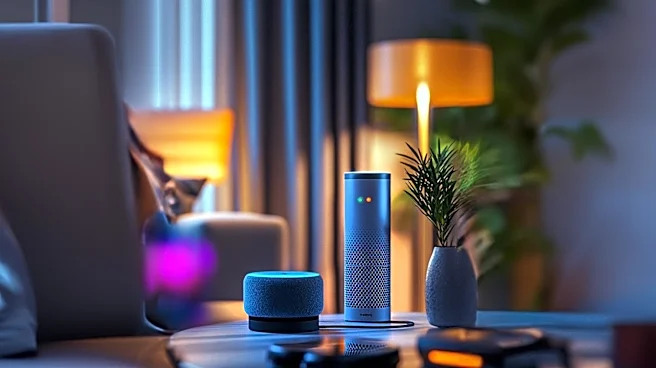
Voice-controlled devices, such as smart lights, switches, sockets, thermostats, and curtains, are designed to simplify everyday routines in smart homes. These devices integrate with popular voice assistants like Alexa, Google Home, and Apple's Siri, allowing
users to manage various home functions through voice commands. The core principle is that voice control should complement, rather than replace, physical controls, ensuring that a home remains functional and user-friendly even when voice commands are not preferred or available. Examples include turning on lights when hands are full, adjusting thermostats, or opening smart curtains. Effective naming of devices and routines, such as 'Living Room Light' instead of 'Channel One,' is crucial for a seamless user experience. The goal is to provide useful automation for common tasks without over-complicating the home environment.
Why It's Important?
The integration of voice-controlled devices into smart homes is significant for U.S. consumers and the technology industry. For consumers, it offers enhanced convenience and accessibility, particularly for tasks that benefit from hands-free operation. This can improve daily life for individuals with mobility challenges or those who frequently multitask. For the industry, it drives innovation in smart home technology, fostering competition among manufacturers of devices and voice assistants. The emphasis on complementing physical controls rather than replacing them addresses a key user concern: reliability and ease of use for all household members, including guests or in situations where Wi-Fi connectivity is poor. This approach ensures broader adoption and satisfaction, as it mitigates potential frustrations associated with over-reliance on technology, thereby expanding the market for smart home solutions.
What's Next?
The future of voice-controlled smart homes will likely see continued advancements in interoperability, with standards like Matter playing a crucial role in allowing devices from different ecosystems to work together seamlessly. This will offer consumers greater flexibility and reduce vendor lock-in. There will also be an increased focus on artificial intelligence (AI) to make smart homes more context-aware and predictive, moving beyond rule-based automation to systems that learn user preferences and anticipate needs. This could lead to homes that proactively adjust settings based on who is present, the time of day, or even external events. However, the development will continue to prioritize the balance between advanced automation and the necessity of physical controls, ensuring that technology enhances, rather than dictates, the living experience. Privacy and data security will also remain critical considerations as these systems become more integrated into daily life.
Beyond the Headlines
Beyond the immediate convenience, the widespread adoption of voice-controlled smart home devices raises deeper implications regarding user agency and the evolving relationship between humans and technology. The design philosophy that emphasizes complementing physical controls reflects a recognition of the psychological need for tangible interaction and control, preventing a complete surrender to automated systems. This approach also highlights the importance of inclusive design, ensuring that smart homes are accessible and intuitive for a diverse range of users, regardless of their tech proficiency. Furthermore, as AI capabilities advance, the ethical considerations around data collection, privacy, and the potential for algorithmic bias in home environments will become increasingly prominent. The long-term shift could redefine our understanding of 'home' as a dynamic, responsive entity, prompting discussions about the ideal balance between technological efficiency and human comfort and autonomy.