






What's Happening?
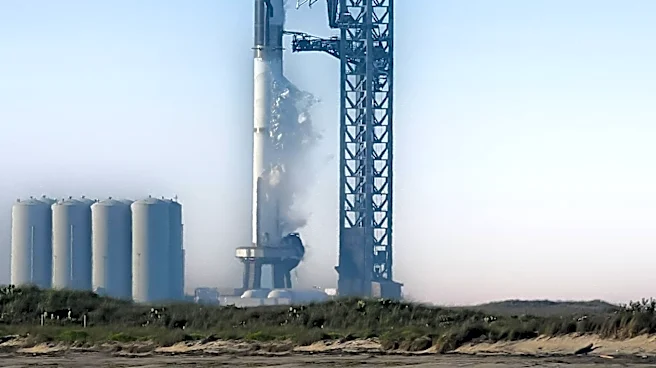
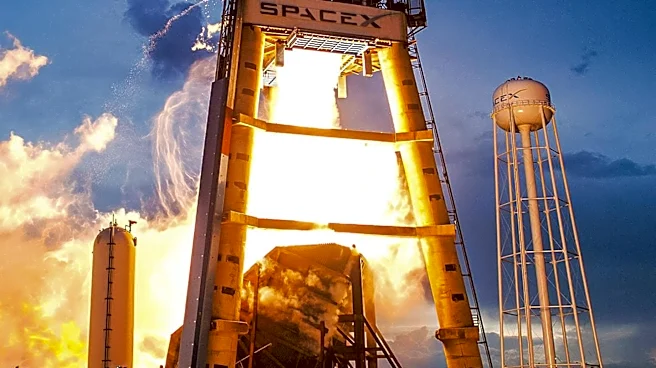
SpaceX has successfully conducted a static-fire test of all six Raptor engines on its Starship upper stage, known as Ship 40, at the company's Massey site in Starbase, Texas. This test is a preparatory step for the 13th test flight of the fully stacked
Starship, expected to occur within the next month. The recent test involved firing all six engines for a full minute, simulating flight-like conditions. This follows a previous test where a single Raptor engine was fired for 15 seconds. The upcoming flight will be the second 'Version 3' (V3) Starship launch, following a previous mission on May 22 that was not entirely successful due to a Super Heavy booster failing to achieve a soft ocean splashdown.
Why It's Important?
The successful engine test marks a significant milestone in SpaceX's ongoing development of the Starship, a super-heavy lift rocket designed for seamless landing and reuse. The V3 version of Starship is the largest and most powerful rocket ever to fly, standing at 408 feet tall. Once fully operational, Starship is expected to play a crucial role in expanding SpaceX's Starlink satellite network and supporting NASA's Artemis program by landing astronauts on the moon. The ability to deliver heavier payloads to orbit than any other rocket in history could revolutionize space exploration and commercial satellite deployment.
What's Next?
Following the successful static-fire test, SpaceX will proceed with rolling the mission's Super Heavy booster to the launch pad for its own engine tests. The Super Heavy booster is equipped with 33 Raptor engines, capable of producing nearly 20 million pounds of thrust at liftoff. If these tests are successful, the 13th test flight of the Starship could occur as early as August. This flight will likely mirror the objectives of the previous mission, including relighting one of Ship's Raptor engines in space.