







What's Happening?
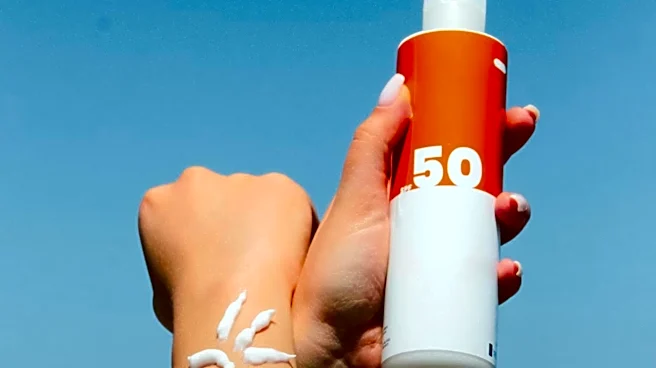
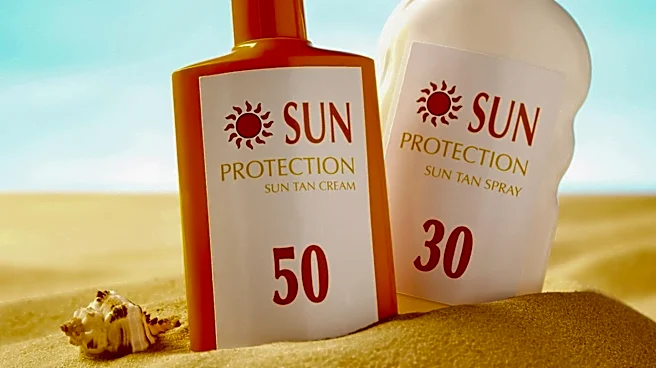
The U.S. Food and Drug Administration (FDA) has approved bemotrizinol, a broad-spectrum chemical UV filter, after 20 years of testing. This ingredient, known for blocking both UVA and UVB rays, is expected to improve the effectiveness and user experience
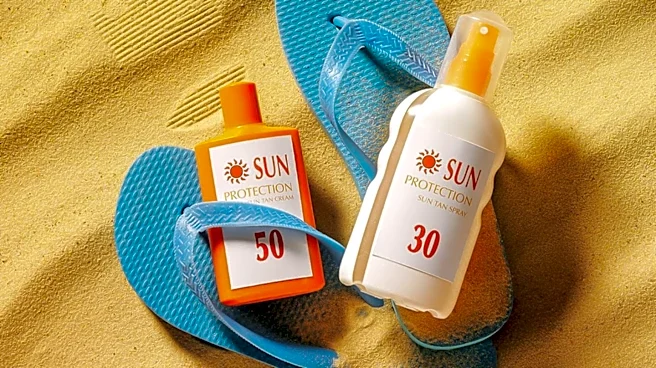
of chemical sunscreens. Unlike avobenzone, the current standard in American sunscreens, bemotrizinol remains stable in sunlight, offering consistent protection. The ingredient has been used in Europe and Asia for decades and is praised for its safety and stability. DSM-Firmenich, the European company behind bemotrizinol, will have exclusive marketing rights for 18 months, selling it under the brand name Parsol Shield.
Why It's Important?
The approval of bemotrizinol marks a significant advancement in sunscreen technology in the U.S., potentially leading to more effective and user-friendly products. This development addresses a long-standing gap in the American market, where sunscreen ingredients have lagged behind those available internationally. The stability of bemotrizinol in sunlight means consumers can rely on consistent protection without frequent reapplication. This could lead to increased sunscreen use, reducing the risk of skin cancer and premature aging. The FDA's approval process, which classifies sunscreen as an over-the-counter drug, has historically slowed the introduction of new ingredients, making this approval a notable achievement.
What's Next?
With the FDA's approval, sunscreen products containing bemotrizinol are expected to hit U.S. shelves by early fall. Dermatologists anticipate that the ingredient will lead to more elegant formulations, encouraging regular use among consumers. The exclusive marketing rights held by DSM-Firmenich will likely influence the initial availability and pricing of these products. As the market adapts, other companies may seek to incorporate bemotrizinol into their formulations, potentially leading to a broader range of options for consumers. The approval may also prompt discussions on the FDA's regulatory approach to sunscreen ingredients, possibly influencing future policy changes.