

What's Happening?
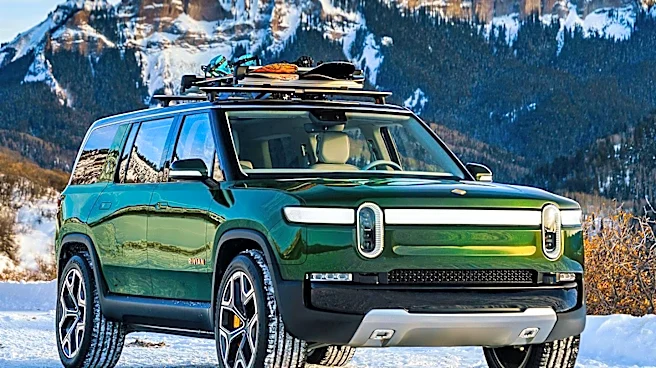
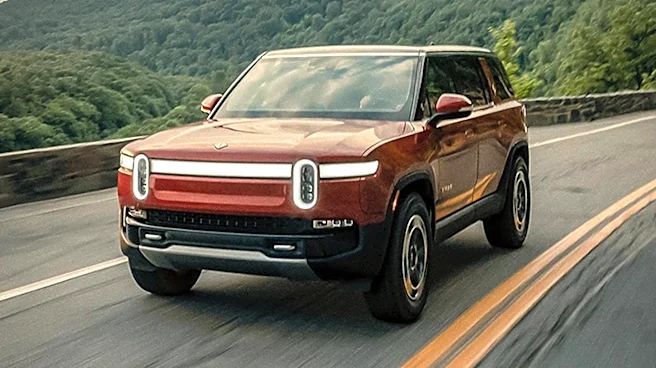
Rivian Automotive, Inc. is strategically shifting its focus towards its R2 SUV model, which has become its best-selling vehicle in the third quarter, contributing to record deliveries of 19,248 vehicles—a 46% increase from the previous quarter. This surge
in R2 sales has also led to a 38% rise in third-quarter revenue, reaching $2.2 billion. A key aspect of this strategy is the R2's significantly lower bill of materials cost, which is half that of the R1 model. This cost reduction is central to Rivian's long-term plan to broaden its customer base and improve profitability. The company is expanding R2 production with a second shift at its Normal, Illinois, manufacturing facility, which produced 19,751 vehicles in the third quarter, an 84% increase year-over-year. Rivian anticipates the R2 will constitute the majority of its total deliveries in the fourth quarter and projects full-year deliveries of 67,000 to 70,000 vehicles.
Why It's Important?
Rivian's pivot to the R2 model is crucial for its financial stability and market positioning in the competitive electric vehicle industry. The lower production cost of the R2 is expected to significantly improve Rivian's gross margins, a critical step towards achieving profitability after reporting a net loss of $3.6 billion last year. This strategy aims to attract a wider customer base by offering a more affordable option, addressing the slowing demand for electric vehicles, partly due to the expiration of federal tax credits. The company's approach to vehicle development, emphasizing a 'clean sheet' design and full control over its technology stack, allows for continuous improvement through over-the-air software updates, differentiating it from traditional automakers. This focus on software-defined vehicles and autonomous driving technology, including its 'Large Driving Model,' positions Rivian to capitalize on future market trends and potentially gain market share in the evolving EV landscape.
What's Next?
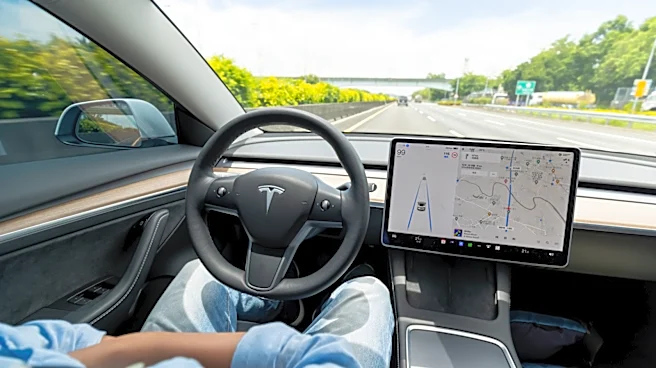
Rivian plans to introduce new point-to-point navigation capabilities for its Autonomy+ platform to a limited group of customers later this year, with a broader release scheduled for 2027. This feature, which allows vehicles to navigate routes with driver supervision, is expected to become a significant purchase criterion for customers, similar to Tesla's Full Self-Driving. The company's software architecture also holds potential for commercial vans and future mobility services, including robotaxi development through its collaboration with Uber. Rivian's acquisition of Third Dimension AI Inc. further supports its advancements in driver-assistance and autonomous driving systems. Interim Chief Financial Officer Derek Mulvey anticipates that the R2 will help Rivian achieve a positive automotive gross margin exit rate for the year, indicating a continued focus on cost efficiency and increased R2 production.
Beyond the Headlines
The success of Rivian's R2 model and its integrated software platform could signify a broader shift in the automotive industry towards software-defined vehicles and advanced autonomous capabilities. By controlling its entire technology stack, Rivian is not just selling cars but offering a continuously evolving platform that can adapt to new features and improvements. This approach challenges traditional automakers, who often struggle with legacy architectures. The emphasis on data collection from vehicles to refine autonomous driving systems highlights the increasing importance of AI and machine learning in automotive development. As autonomy becomes a more significant factor in consumer purchasing decisions, Rivian's early investment in its 'Large Driving Model' and point-to-point navigation could give it a competitive edge, potentially reshaping consumer expectations for vehicle functionality and ownership experience.