







What's Happening?
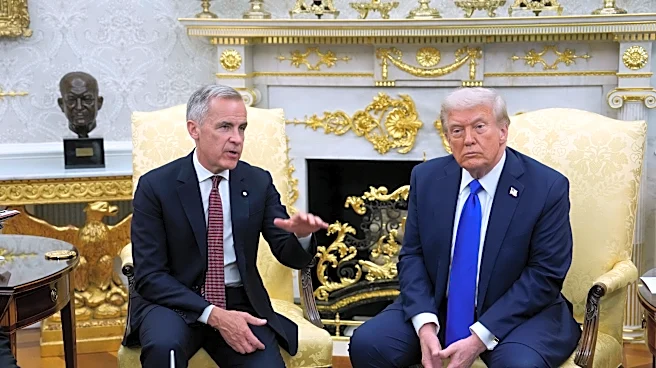
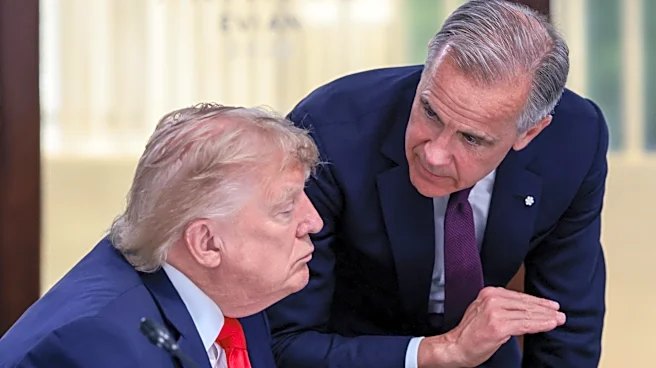
President Trump announced a three-day pause on new 50% tariffs set to go into effect on Canadian goods, stating that the U.S. and Canada had reached an agreement. This announcement came after President Trump spoke with Canadian Prime Minister Mark Carney.
Canadian officials, including Canada’s minister responsible for U.S. trade, Dominic LeBlanc, and chief trade negotiator Janice Charette, had been in Washington for talks, meeting with U.S. Trade Representative Jamieson Greer and Commerce Secretary Howard Lutnick. While President Trump declared a deal, Prime Minister Carney stated that "substantial progress has been made, although there is important work still to be done." The U.S. Trade Representative's office indicated the deal would include "comprehensive market access for all American goods, economic security commitments, digital trade alignment," and other provisions.
Why It's Important?
This temporary pause in tariffs and the reported agreement are significant for U.S.-Canada trade relations, which have been strained by President Trump's protectionist policies. The imposition of 50% tariffs on Canadian goods, covering approximately $20 billion worth of imports, would have had substantial economic consequences for both countries, potentially leading to job losses and business closures in vulnerable sectors. The involvement of Commerce Secretary Lutnick in these high-level negotiations underscores the administration's commitment to using tariffs as a leverage point in trade discussions. A successful resolution could de-escalate trade tensions and provide stability for businesses reliant on cross-border trade, while a failure to finalize the deal could reignite a trade dispute with broader economic implications for North America.
What's Next?
The three-day pause provides a window for the finalization of documents and further negotiations between the U.S. and Canada. The U.S. proclamation mentioned Canada's commitment to address U.S. concerns regarding duties on dairy products, alcoholic beverages, and motor vehicles. A major point of contention has been how tariff deductions based on content should be calculated, with the U.S. pushing for only U.S.-produced content to be counted, while Canada advocated for all North American content. The outcome of these final discussions will determine whether the tariffs are permanently averted or if trade tensions will resume. The situation also highlights the ongoing renegotiation of the US-Mexico-Canada Agreement (USMCA) and the potential for further concessions from Canada.
Beyond the Headlines
Beyond the immediate trade implications, this event reflects the broader strategy of the Trump administration to reshape global trade dynamics through assertive tariff policies. The use of Section 338 of the Tariff Act of 1930, which authorizes the president to impose tariffs of up to 50% on imports from countries that have discriminated against U.S. businesses, represents an unprecedented application of a nearly century-old law. This approach challenges established international trade norms and could set a precedent for future administrations. The focus on domestic content and market access also signals a shift towards economic nationalism, potentially impacting global supply chains and the competitiveness of multinational corporations. The long-term effects could include a more fragmented global trading system and increased pressure on countries to prioritize domestic production over international specialization.