


What's Happening?
The New York Mets are being cautioned against rushing into early contract extensions for their promising young players, despite the growing trend in Major League Baseball. The division-rival Atlanta Braves serve as a case study, demonstrating both the potential
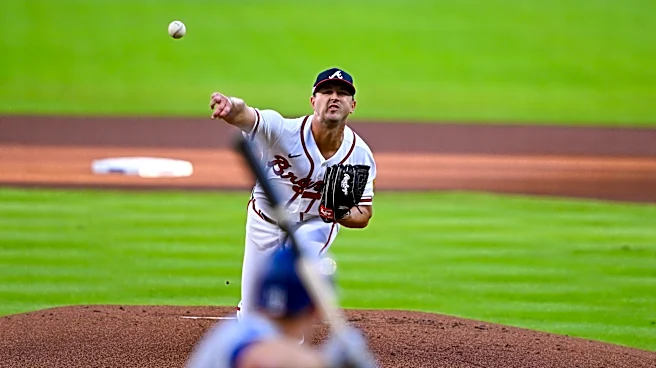
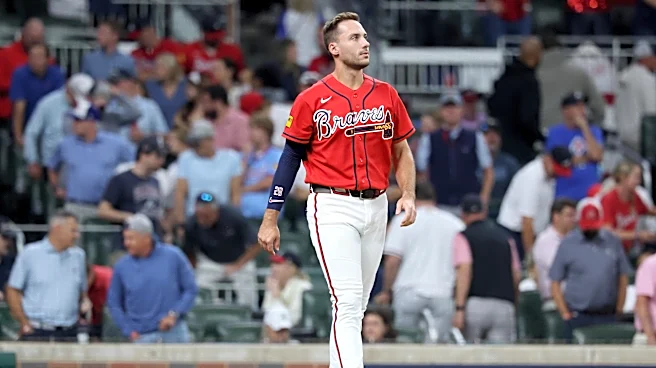
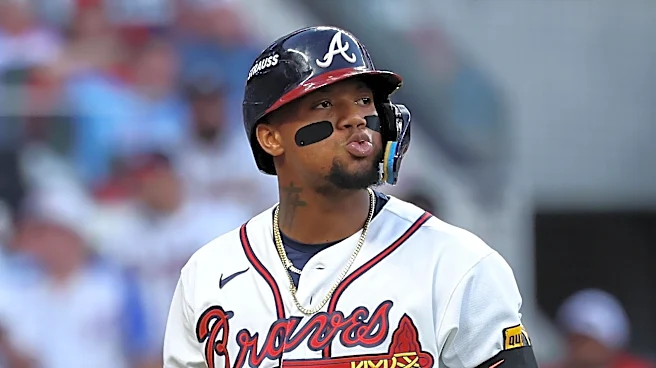
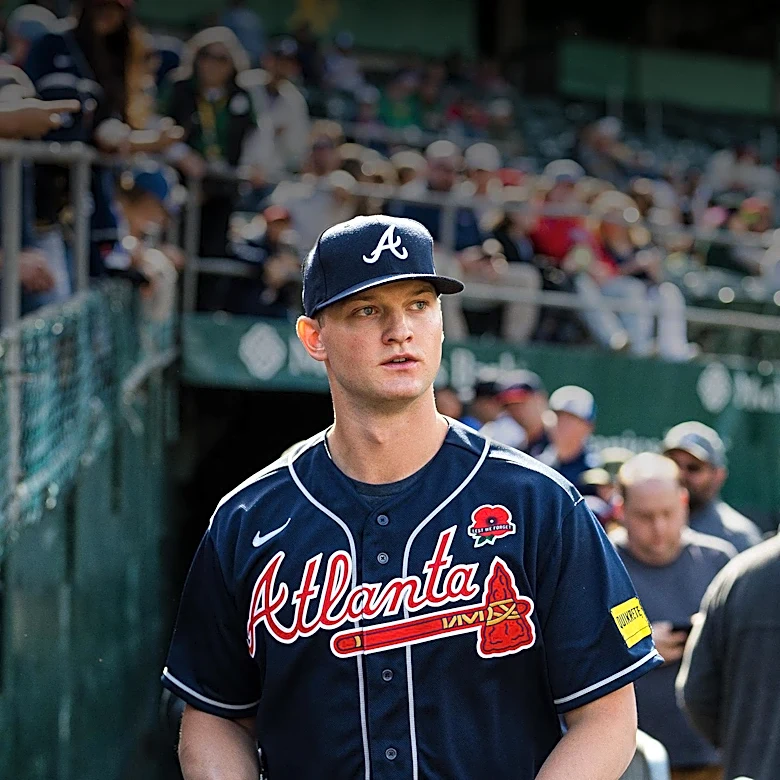
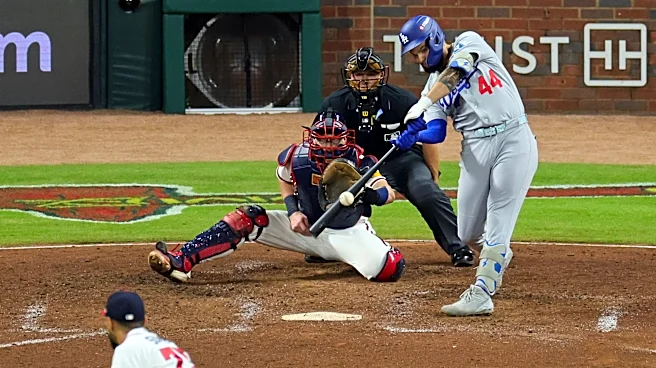
benefits and significant risks associated with such deals. While the Braves secured favorable long-term contracts with stars like Ronald Acuña Jr. and Ozzie Albies early in their careers, other extensions have proven problematic. For instance, Spencer Strider's six-year, $75 million deal was followed by injury struggles, and Austin Riley's 10-year, $212 million contract has seen him battle injuries and declining performance. Similarly, Sean Murphy's six-year, $73 million extension has been marred by injuries and sub-.200 batting averages, leading to him becoming a backup catcher. These examples highlight that player development is not always linear and injuries can quickly derail even the most promising talents, making early long-term commitments a gamble for teams like the Mets.
Why It's Important?
This cautionary advice is crucial for the New York Mets as they navigate their strategy for building a sustainable, competitive team. Locking up young talent early can provide cost control and long-term stability, but it also carries substantial financial risk if players do not perform as expected or suffer significant injuries. For a big-market team like the Mets, the decision to extend young players early impacts not only their payroll flexibility but also their ability to acquire other key free agents or make trades. Learning from the Braves' experiences, both positive and negative, can help the Mets avoid costly mistakes that could hinder their competitive window. Overpaying for unproven potential or players whose performance declines due to injury can tie up significant financial resources, limiting future roster improvements and potentially impacting the team's overall competitiveness for years.
What's Next?
The New York Mets front office will likely continue to evaluate their young prospects, such as Carson Benge, Nolan McLean, and A.J. Ewing, while carefully considering the timing and terms of any potential contract extensions. The team will need to weigh the desire for long-term control against the risks of committing significant financial resources to players who are still developing or have not yet established consistent major league performance. This approach suggests a more measured strategy, potentially allowing players to prove themselves over a longer period before offering lucrative, long-term deals. The Mets may also observe how the Braves' more recent extensions play out over the coming seasons, particularly regarding the long-term health and performance of players like Strider, Riley, and Murphy, to inform their own decision-making process.
Beyond the Headlines
The debate over early contract extensions reflects a broader philosophical shift in MLB team management. While smaller-market teams often use these deals to secure talent before arbitration drives up costs, larger-market teams like the Mets are increasingly adopting similar strategies, seeking certainty and potential value. However, this trend also highlights the inherent unpredictability of professional sports careers, where factors like injury, natural performance regression, and the non-linear nature of player development can quickly turn a seemingly shrewd investment into a financial burden. The ethical dimension also comes into play, as teams balance securing players at a lower cost against the players' potential to earn significantly more if they reach their full potential. This ongoing tension between financial security for players and cost control for teams will continue to shape roster construction and player movement across the league.