






What's Happening?
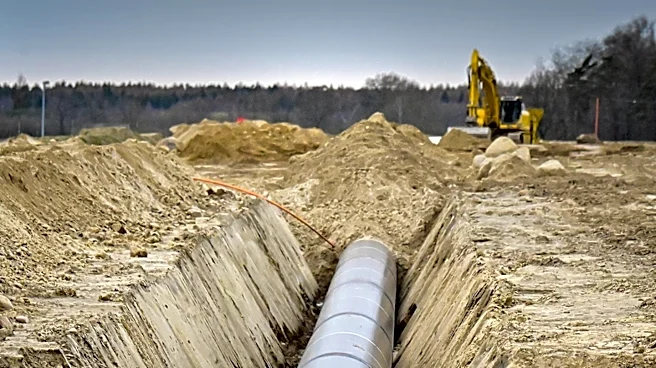
The United States is experiencing an accelerated pace in the buildout of its interstate natural gas pipeline infrastructure. Projections indicate that if planned projects proceed on schedule, the total U.S. interstate natural gas transmission capacity
could reach approximately 300 Bcf/d by 2029. This represents a substantial increase from the estimated 255.96 Bcf/d in 2025, which itself was a 64% increase from 155.95 Bcf/d in 2011. The current project queue suggests an annual growth rate of roughly 6%, a 50% acceleration compared to the average 4% annual growth rate observed between 2011 and 2025. This faster pace is attributed to stronger demand for natural gas and more favorable permitting conditions. While projects targeting 2026 and 2027 are focused on moving supply to Gulf Coast transportation networks and LNG demand, development from 2028 onwards is expected to expand across the interstate system to serve power generation, industrial activity, and data centers.
Why It's Important?
This significant expansion of natural gas pipeline capacity is crucial for meeting growing energy demands across various sectors in the U.S. The increased transmission capacity will support the burgeoning liquefied natural gas (LNG) export market, enhance energy security, and provide reliable fuel for power generation, industrial operations, and data centers. For industries, this means more stable and potentially lower energy costs, fostering economic growth and competitiveness. However, the reliance on natural gas also has environmental implications, as it is a fossil fuel, and its increased use could impact climate goals. The faster buildout, while beneficial for energy supply, also highlights the ongoing debate between energy needs and environmental concerns. The improved permitting conditions, partly due to reduced litigation risk related to NEPA after the Seven County decision and changes by FERC, are facilitating this growth, but the absence of comprehensive wholesale permitting reform still poses risks to future development.
What's Next?
The trajectory of U.S. interstate natural gas pipeline capacity will largely depend on the timely completion of currently planned projects and the evolution of permitting regulations. Stakeholders, including energy companies, environmental groups, and regulatory bodies, will continue to monitor and influence these developments. The Federal Energy Regulatory Commission (FERC) is pursuing broader changes to its blanket certificate program, which could further streamline smaller expansions and connections within the existing system. However, project opposition, particularly concerning environmental, cultural-resource, and landowner issues, is expected to persist. The ongoing push for wholesale permitting reform in Congress, though currently elusive, could significantly impact the long-term landscape of pipeline development. The industry will likely focus on navigating these regulatory and public challenges while striving to meet the projected in-service targets for new infrastructure.
Beyond the Headlines
The accelerated pipeline buildout reflects a complex interplay of economic drivers, regulatory shifts, and environmental considerations. While the immediate benefit is enhanced energy supply and economic activity, the long-term implications extend to the nation's energy mix and climate commitments. The Supreme Court's Seven County decision and FERC's procedural changes underscore a broader trend of regulatory adjustments aimed at facilitating infrastructure development, potentially at the expense of more extensive environmental reviews. This raises questions about the balance between economic expediency and environmental protection. The continued reliance on natural gas infrastructure also highlights the challenges in transitioning to renewable energy sources, as significant investments are still being made in fossil fuel infrastructure. The ethical dimension involves ensuring equitable compensation for affected landowners and addressing the concerns of communities impacted by pipeline routes, even as the nation seeks to secure its energy future.