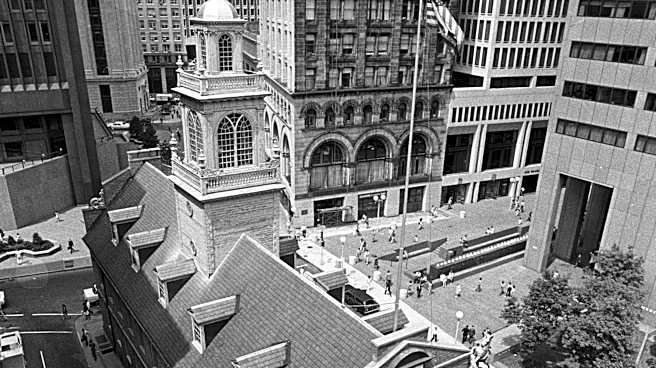





What's Happening?
Boston is advancing a plan to create an 18-acre Exchange District in its Financial District, aiming to simplify the financing process for office-to-residential conversions, particularly for historic buildings. The Massachusetts Historical Commission has
already approved the district, which is now awaiting final review by the National Park Service. This initiative is designed to make it easier for developers to secure historic tax credits, as properties within the district would automatically be eligible for listing in the National Register of Historic Places. This eliminates the time and expense developers typically incur to individually register buildings. Since Boston's tax incentive program for these conversions launched in 2023, 28 applications have been filed for 35 buildings, proposing over 2,400 new residential units from 2 million square feet of former office space. Several large-scale projects, including Vanbarton Group's 476-unit conversion at 31 St. James Ave. and Synergy's 258-unit project at 294 Washington St., are in the pipeline. Developers like Scott Oran of Dinosaur Capital Partners, currently converting 31 Milk St. into 110 housing units, have highlighted the previous complexities of securing individual historic tax credits.
Why It's Important?
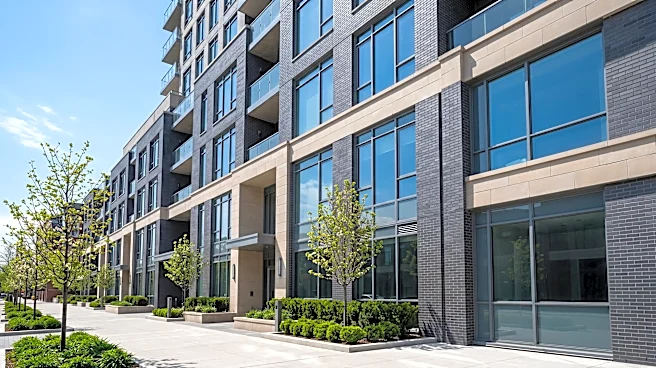
This proposed historic district is crucial for accelerating the transformation of underutilized office spaces into much-needed housing in Boston. By streamlining access to historic tax credits, the city aims to reduce financial hurdles and attract more developers to undertake these complex projects. The initiative addresses the dual challenges of a surplus of vacant office space and a shortage of residential units, particularly in a city with high housing demand. The ability to more easily secure up to 20% of qualified rehabilitation expenditures through tax credits can make otherwise unfeasible projects financially viable. This could lead to a significant increase in housing supply, potentially easing market pressures and revitalizing downtown areas. Furthermore, by encouraging the reuse of historic buildings, the plan helps preserve the city's architectural heritage while adapting it for modern needs, contributing to sustainable urban development and reducing urban sprawl.
What's Next?
The Exchange District's final approval rests with the National Park Service. Once approved, developers with projects within the district will experience a more straightforward path to obtaining historic tax credits, potentially accelerating the start of construction for many proposed conversions. This could lead to a surge in new residential units coming online in the coming years. The city anticipates that this simplified process will not only benefit existing projects but also attract new developers who may have previously been deterred by the complexities of financing historic conversions. Stakeholders, including developers, historic preservationists, and city officials, will be closely monitoring the National Park Service's decision and the subsequent impact on the pace and scale of office-to-residential conversions in Boston's Financial District. The success of this model could also influence other U.S. cities facing similar challenges with vacant office space and housing shortages.
Beyond the Headlines
The creation of the Exchange District in Boston highlights a broader national trend of cities seeking innovative solutions to repurpose aging commercial real estate. This initiative goes beyond mere economic incentives; it represents a strategic effort to reshape urban landscapes and address evolving demographic and economic needs. The emphasis on historic preservation within the conversion process underscores a commitment to maintaining the unique character of urban centers while fostering growth. Ethically, it balances the need for new housing with the responsibility to protect cultural heritage. Legally, it demonstrates how local and federal regulations can be harmonized to facilitate urban renewal. Culturally, it could lead to a more vibrant and mixed-use downtown, transforming areas once dominated by 9-to-5 office workers into dynamic residential communities, fostering a 24/7 urban environment and potentially altering the social fabric of the Financial District.