







What's Happening?
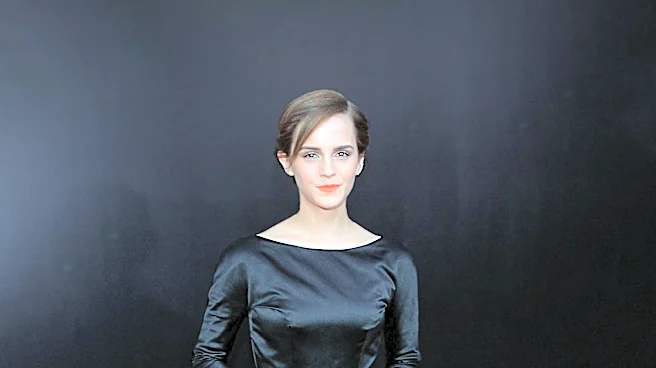
Emma Watson made a notable appearance at the LACMA Art + Film Gala, opting to skip the red carpet but still making a significant fashion statement. She wore a custom gown designed by multidisciplinary artist Caroline Zimbalist. The dress featured a glossy,
corseted design with slipping shoulder straps, described as 'Madame X-worthy.' Zimbalist, a Parsons graduate, specializes in creating bio-based formulas that are applied by hand onto silk. As water evaporates, the material sets and bonds with the fabric, resulting in a fluid, almost molten effect. Watson highlighted the connection between Zimbalist's work and the evening's honorees, including artist Vija Celmins and director Denis Villeneuve, praising their ability to build extraordinary worlds and ask deeply human questions. This appearance marked a rare public outing for the actor, who has maintained a relatively low profile in recent times.
Why It's Important?
Emma Watson's choice to wear a custom piece by Caroline Zimbalist at a high-profile event like the LACMA Art + Film Gala is significant for several reasons. It provides a major platform for Zimbalist, an emerging artist working at the intersection of fashion, sculpture, and performance art, bringing her innovative bio-based design techniques to a wider audience. This exposure can boost Zimbalist's career and influence trends in sustainable and artistic fashion. For Watson, known for her thoughtful approach to public appearances and her advocacy, this choice reinforces her image as someone who supports artistic innovation and sustainability. Her endorsement can inspire others in the entertainment industry and the public to consider more unique and environmentally conscious fashion choices, potentially shifting industry norms towards greater artistic collaboration and sustainable practices.
What's Next?
Following Emma Watson's appearance, Caroline Zimbalist may experience increased demand for her unique designs and collaborations. This could lead to more opportunities for her to showcase her work in high-fashion events, art exhibitions, or partnerships with other celebrities and brands interested in sustainable and artistic fashion. For Emma Watson, this event could signal a continued, albeit selective, engagement with public life and the arts, potentially leading to future collaborations that align with her values. The broader fashion industry might also take note, with more designers exploring bio-based materials and interdisciplinary approaches to garment creation, inspired by Zimbalist's innovative methods. This could foster a trend towards more sculptural and performance-art-inspired fashion on red carpets and in mainstream collections.
Beyond the Headlines
Emma Watson's choice to wear Caroline Zimbalist's creation goes beyond a simple fashion statement; it highlights a growing convergence of art, fashion, and sustainability. Zimbalist's method of creating garments using bio-based formulas directly on silk challenges traditional fashion production, emphasizing craftsmanship, material innovation, and a unique artistic vision. This approach raises questions about the future of haute couture and the potential for fashion to be viewed as wearable art rather than just clothing. It also underscores the ethical dimension of celebrity influence, as Watson uses her platform to champion artists who are pushing boundaries in sustainable and artistic practices. This could inspire a deeper conversation within the industry about the environmental impact of fashion and the value of supporting emerging artists who prioritize innovative and responsible creation.