


What's Happening?
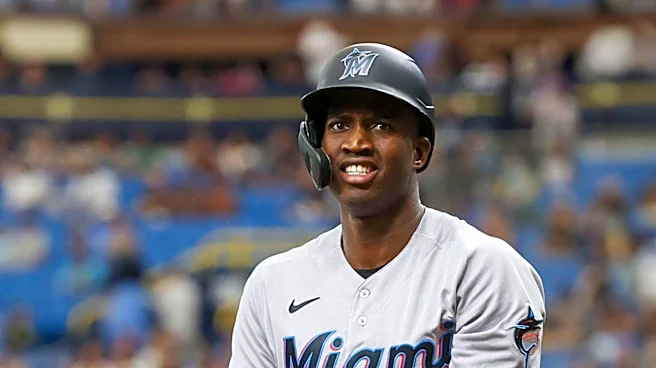
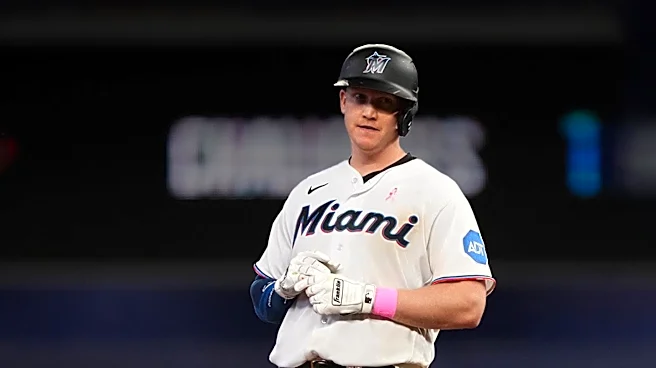
The Miami Marlins are reportedly open to trading second baseman/shortstop Xavier Edwards, along with other young hitters, as part of a potential roster restructuring. This consideration comes despite Edwards being part of what was arguably the best middle
infield tandem in baseball last season alongside Otto Lopez. The Marlins have a history of selling high on players, even after successful seasons, to acquire new talent or manage costs. While the team currently possesses a strong core of young players, including Edwards, many of them will be entering their final year of club control by 2029, making their long-term future with the team uncertain due to arbitration and increasing expenses. The team's strategy often involves trading established players for prospects to maintain a competitive farm system, a model similar to that of the Brewers and Rays.
Why It's Important?
This potential trade signals a continuation of the Miami Marlins' long-standing organizational philosophy, which prioritizes financial flexibility and a continuous influx of young talent over retaining high-cost veteran players. For fans, this approach can be frustrating, as it often leads to the departure of popular and productive players. However, it also ensures a steady pipeline of prospects, which can lead to future competitive windows. For Xavier Edwards, a trade would mean a new opportunity with a different organization, potentially impacting his career trajectory and development. For the Marlins, such a move could free up salary space and bring in new prospects, but it also risks disrupting team chemistry and losing proven talent. The decision reflects a broader trend in MLB where smaller market teams often rely on player development and strategic trades to remain competitive.
What's Next?
The Miami Marlins will likely continue to evaluate their roster and financial commitments as key players approach arbitration and the end of their club control. Decisions regarding players like Xavier Edwards will be made in the context of the team's long-term strategy for sustained competitiveness. If Edwards is traded, the Marlins would seek prospects or players who fit their future plans, potentially impacting their lineup for the upcoming seasons. The team's ability to acquire impactful prospects in return for current talent will be crucial for the success of this strategy. The outcome of these decisions will shape the Marlins' roster composition and competitive outlook for 2029 and beyond.
Beyond the Headlines
The Marlins' approach to roster management, characterized by trading valuable players for prospects, highlights a significant ethical and economic tension in professional sports. While financially prudent for the organization, it can be perceived as disloyal to players and frustrating for a fanbase that invests emotionally in individual athletes. This strategy also raises questions about player agency and the balance of power between teams and players, especially as players approach arbitration and free agency. The constant churn of talent, while potentially leading to future success, can also hinder the development of a consistent team identity and long-term fan engagement. The case of Xavier Edwards exemplifies this ongoing debate within baseball about how teams should balance financial sustainability with competitive aspirations and fan loyalty.