




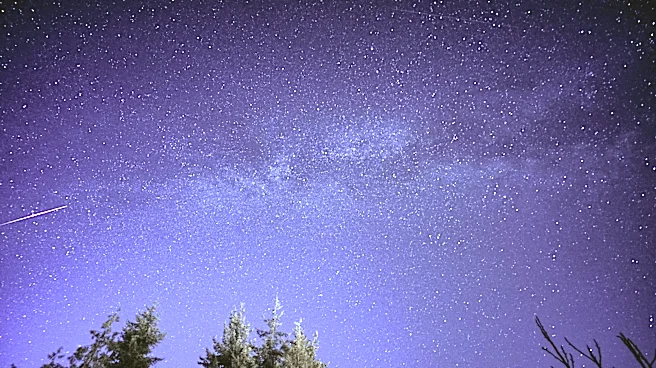


What's Happening?
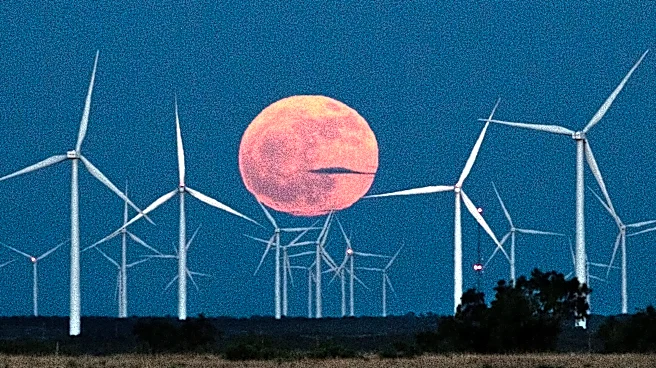
Stargazers in the Northern Hemisphere are preparing for the June full moon, known as the 'Strawberry Moon,' which will reach its peak illumination at 7:57 p.m. EDT on June 29, 2026. This event marks the first full moon of the summer season. The 'Strawberry Moon'
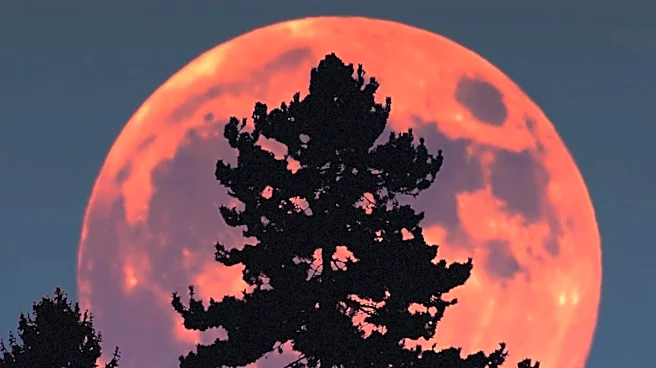
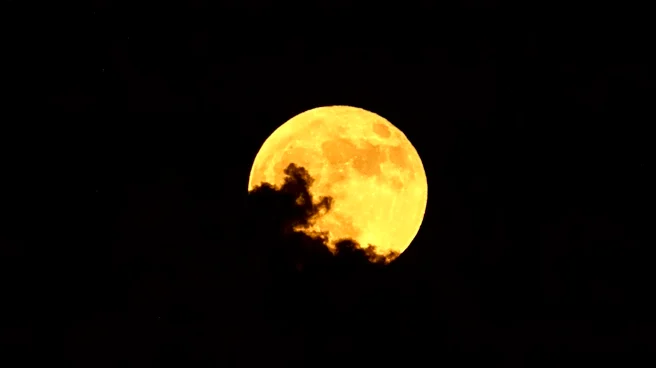
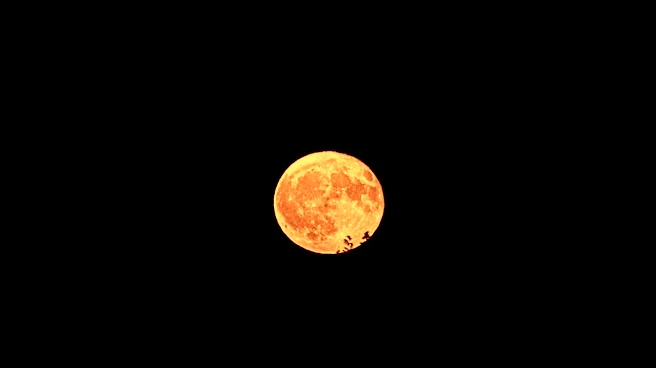
follows an unusually low trajectory across the southern horizon, creating a visual spectacle where the moon appears to hug the horizon. This low path is due to the moon being positioned opposite the sun, which follows its highest path in June. The moon's distinctive golden or orange hue is a result of atmospheric scattering, as its light travels through a thicker layer of Earth's atmosphere.
Why It's Important?
The 'Strawberry Moon' is significant for its cultural and observational value. Named by Native American Algonquin tribes to mark the wild strawberry harvest, it has become a part of the traditional full moon calendar. The event offers a unique opportunity for photographers and nature enthusiasts to capture the moon's beauty as it rises low on the horizon. Its cultural origins and the visual spectacle it provides make it a favorite among amateur astronomers and photographers. The event also highlights the intersection of natural phenomena and cultural traditions, enriching the public's appreciation of astronomy.
What's Next?
Observers are encouraged to find locations with a clear southeastern horizon to fully experience the 'Strawberry Moon.' The best time for viewing and photography is shortly after moonrise, when the moon's color is most pronounced. This event is part of a series of full moons, with the next being the 'Buck Moon' in July. The 'Strawberry Moon' serves as a reminder of the cyclical nature of celestial events and their impact on cultural practices. As interest in astronomy grows, such events may inspire more public engagement with science and nature.