







What's Happening?
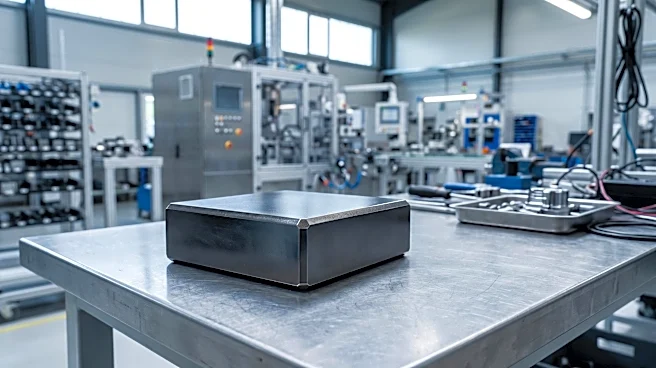
Vulcan Elements is actively expanding its manufacturing capabilities for high-performance rare-earth magnets in North Carolina. The company currently operates a manufacturing plant in Research Triangle Park and is developing a new rare-earth magnet facility
in Benson, N.C. This expansion is part of a broader effort to secure the U.S. critical minerals supply chain, which is vital for national security and economic resilience. Undergraduate Henry Kuemmel, through connections at Duke University, is working with Vulcan Elements to convert metal oxides into usable metal for magnets using electrochemical and chemical processes. This work is a crucial step in the production of these high-performance magnets, which are essential for various industries including defense, aerospace, and automotive. The initiative highlights the importance of domestic production of critical minerals and their derivatives.
Why It's Important?
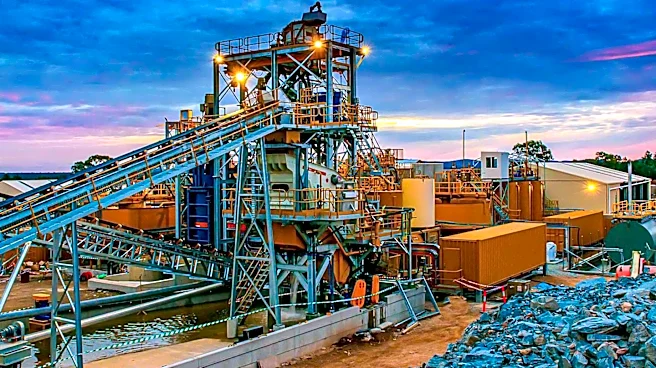
The domestic production of rare-earth magnets by companies like Vulcan Elements is critical for reducing U.S. reliance on foreign sources for essential materials. The U.S. Geological Survey lists 60 critical minerals vital to the economy and national security, many of which have supply chains vulnerable to disruption and are largely controlled by a few countries. North Carolina, with over half of these federally listed critical minerals, is emerging as a key player in this sector. By establishing manufacturing facilities within the U.S., Vulcan Elements contributes to a more resilient supply chain, mitigating risks associated with geopolitical tensions, trade restrictions, and price volatility. This localized production also fosters economic growth and job creation within the U.S., particularly in states like North Carolina, which is actively supporting the development of a critical minerals ecosystem.
What's Next?
The continued development of Vulcan Elements' rare-earth magnet facility in Benson, N.C., signifies a step towards increased domestic capacity for critical mineral processing and manufacturing. This expansion is likely to attract further investment and collaboration within the U.S. critical minerals sector. Educational institutions, such as Duke University's Critical Minerals Hub, will continue to play a vital role in training the next generation of professionals and conducting research to optimize extraction, processing, and recycling methods. The focus will remain on developing sustainable and environmentally responsible practices for critical mineral production, while also exploring opportunities to recover minerals from waste streams. The success of companies like Vulcan Elements could encourage other businesses to invest in domestic critical mineral supply chains, further strengthening U.S. economic and national security.
Beyond the Headlines
The efforts by Vulcan Elements and academic institutions like Duke University underscore a significant shift towards re-shoring critical manufacturing capabilities. This move has deeper implications beyond immediate economic benefits, touching upon national sovereignty and technological independence. The reliance on a few foreign nations for critical minerals has long been a strategic vulnerability, impacting sectors from defense to renewable energy. By developing domestic processing and manufacturing, the U.S. aims to secure its technological future and reduce exposure to global supply chain shocks. This initiative also highlights the complex interplay between industrial development, environmental stewardship, and community engagement, as the increased demand for critical minerals necessitates careful consideration of mining impacts and sustainable practices. The integration of academic research with industrial application, as seen with Duke students working at Vulcan Elements, is crucial for innovating solutions that balance economic needs with environmental responsibility.