






What's Happening?
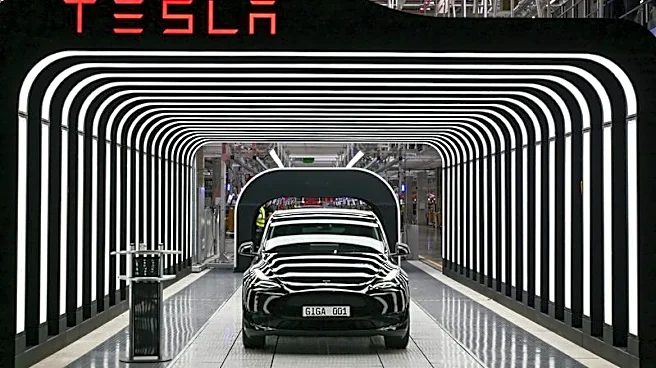
Investor Gary Black has criticized Tesla's Full Self-Driving (FSD) technology, claiming it is not a significant driver of sales. He argues that consumers are largely unaware of Tesla's autonomy efforts. Black's comments come amid a decline in Tesla shares
and a rally in Rivian's stock, which he attributes to higher gas prices rather than interest in autonomous driving. Rivian reported a 10% year-over-year increase in deliveries for the second quarter, boosting its stock by 8%. Meanwhile, Tesla CEO Elon Musk announced increased production of the Optimus Humanoid robot at the Fremont facility, indicating a shift in focus following the discontinuation of the Model S and X.
Why It's Important?
Black's critique of Tesla's FSD technology highlights ongoing skepticism about the commercial viability and consumer interest in autonomous driving features. The contrasting stock performances of Tesla and Rivian suggest that market dynamics, such as fuel prices, may have a more immediate impact on electric vehicle sales than autonomous capabilities. This situation underscores the challenges automakers face in balancing innovation with market demands. The focus on Tesla's Optimus robot production also indicates a strategic pivot towards robotics, which could diversify Tesla's business model and open new revenue streams.
What's Next?
Tesla may need to address consumer awareness and confidence in its FSD technology to bolster its market position. The company might also focus on enhancing the functionality and safety of its autonomous features to drive adoption. Rivian's continued growth could pressure Tesla to innovate and maintain its competitive edge in the electric vehicle market. The development of the Optimus robot could lead to new partnerships and applications in various industries, potentially reshaping Tesla's future business strategy.