







What's Happening?
U.S. architecture firms are experiencing challenging business conditions, as indicated by an AIA/Deltek Architecture Billings Index (ABI) score of 47.2 in August, signifying a continued downward trend in billings. While the rate of decline eased slightly
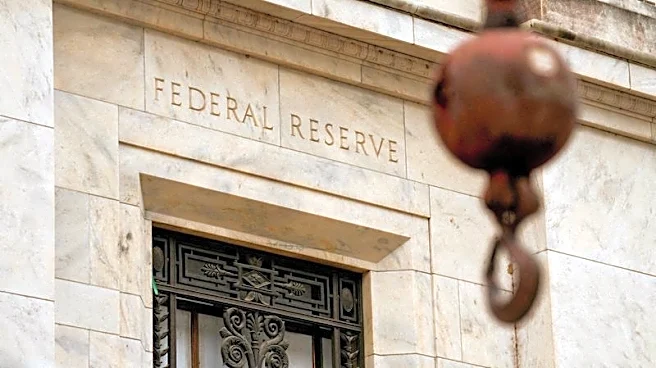
from July, inquiries into new projects showed only modest growth, and the value of newly signed design contracts decreased. Regionally, performance was mixed, with the Midwest seeing modest growth for the first time in nearly a year and Western firms reporting flat billings. In contrast, Northeast firms experienced a sharp decline in billings, reaching their lowest level since 2020. This comes despite an increase of 700 architectural services jobs in July. The broader economic context includes a rise in the Consumer Price Index (CPI) by 0.4 percent in August, following a 0.1 percent increase in July, bringing the annual inflation rate to 3.4 percent, largely driven by rising gasoline and energy prices. AIA Chief Economist Richard Branch noted that firms are caught between persistent inflation and increased borrowing costs, with the Federal Reserve's recent rate hike adding further financial pressure.
Why It's Important?
The sustained soft business conditions for U.S. architecture firms have significant implications for the construction sector and the broader economy. A decline in design contracts and project inquiries suggests a potential slowdown in future construction activity, which can impact jobs across various trades, material suppliers, and related industries. The struggle of architecture firms with inflation and higher borrowing costs, as highlighted by the AIA, reflects a challenging financing environment that could deter new developments and expansions. This situation affects not only the profitability and stability of architectural practices but also the pipeline of new infrastructure, commercial, and residential projects. The regional disparities in billings indicate uneven economic recovery and investment across the country, with the Northeast experiencing a particularly sharp downturn. This trend could lead to reduced innovation in building design and sustainable practices if firms are forced to cut back on investments due to financial pressures. The employment growth in architectural services in July, despite overall soft conditions, suggests a complex labor market where demand for skilled professionals might still exist even as project volumes decline.
What's Next?
Architecture firms are becoming less optimistic about future billings, with the share expecting declines rising from 21 percent at the end of the first quarter to 29 percent by the end of the third quarter. This suggests a continued period of caution and potential contraction within the industry. The Federal Reserve's recent rate increase, while intended to ease inflationary pressures, is expected to add further headwinds for projects facing difficult financing conditions in the near term. Firms will likely need to adapt to this environment by focusing on cost management, seeking out more stable regional markets, or specializing in sectors that show more resilience. The ongoing inflation, particularly in energy prices, will continue to impact project costs, potentially leading to delays or cancellations of planned developments. Stakeholders in the construction and real estate sectors will be closely monitoring economic indicators and Federal Reserve actions for signs of stabilization or further tightening, which will directly influence investment decisions and project viability.
Beyond the Headlines
The current economic climate for U.S. architecture firms underscores a broader challenge in balancing economic growth with inflationary control. The interplay between the Federal Reserve's monetary policy, which aims to curb inflation through interest rate hikes, and its direct impact on project financing highlights the delicate balance required to maintain economic stability. For the architectural profession, this period could accelerate shifts towards more efficient project delivery methods, such as Building Information Modeling (BIM), which can offer productivity gains and cost reductions. Firms might also explore new business models or diversify their services to mitigate risks associated with traditional project cycles. The regional variations in performance could lead to a redistribution of talent and investment, potentially strengthening architectural hubs in more resilient areas while challenging those in struggling regions. This situation also brings to light the importance of advocacy by organizations like the AIA in addressing policy issues that affect the economic vitality and well-being of the architecture and construction industries.